Shower and Bathtub Plumbing
Valve bodies, cartridges and multi-outlet showers.
About this serviceDallas-Fort Worth
Colleyville is custom-built, mostly from the late 1980s through the 2000s, and no two houses here were plumbed to the same drawing. The master bathrooms of that era were where the budget went: multi-head showers, steam, body sprays, thermostatic valves, whirlpool tubs. Those systems are now twenty to thirty years old, and the hardest question on this ZIP code is not how to fix them. It is whether the parts still exist.
24/7 dispatch · Colleyville · Tarrant County
The visible handle and escutcheon are the cheap, replaceable part. The decision that matters is about the valve body buried in the wall.
Trim and valve are separate purchases. Manufacturers sell a rough-in valve that gets plumbed into the wall, and a trim kit that mounts on it. A leaking or stiff shower usually needs a cartridge or a trim part, and that is a modest job. Replacing the valve body means opening the wall.
Identify the valve, not the handle. Two houses on the same street can have identical-looking handles on completely different valve bodies. The brand and series stamped on the valve or cast into the body is what determines parts, and often the only way to read it is with the trim off.
Custom builders bought widely. Alongside the major American brands, Colleyville bathrooms of this era contain European and boutique valve bodies specified by a designer. Some are still fully supported. Some were distributed here for six years and then vanished, and that is the single biggest determinant of what a repair costs.
Thermostatic and pressure-balance are not the same device. A pressure-balance valve keeps the hot and cold ratio steady when another fixture draws. A thermostatic valve holds an actual set temperature, and usually feeds volume controls for separate outlets. They fail differently and their parts are not interchangeable, so the diagnosis starts with knowing which you have.
This is the conversation we have most often in Colleyville, and it is better to have it clearly than optimistically.
Cartridges outlast their supply chains. A ceramic cartridge can run twenty-five years. Support for a discontinued series frequently does not. Once the manufacturer stops making it and the remaining stock at specialist suppliers is gone, the valve is unrepairable even though the body in the wall is in perfect condition.
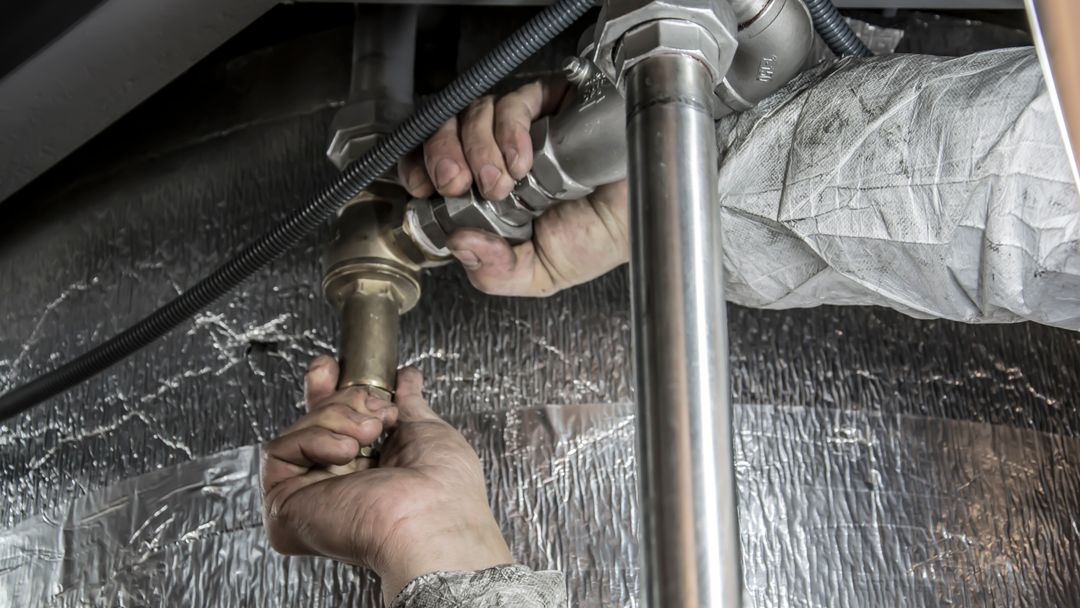
Rebuild kits are the first thing we chase. Seals, springs, seats and O-rings for a known body, a compatible cartridge from the current range, or a legitimate aftermarket equivalent where one genuinely exists and performs. This is worth the time it takes, because it keeps the tile closed.
Retrofit plates exist for some families. Several manufacturers make an escutcheon that covers the opening left by an older valve of the same brand, so a modern valve can go in with limited tile work. Whether one exists for your specific valve is a real research question and a genuinely important one.
Then it is a judgement about the whole bathroom. If the valve is obsolete, the tile must be opened and the bathroom is a 1995 design that you dislike, spending significant money to restore it exactly is rarely the right call. If you love the room, restoring it properly is entirely legitimate. What we will not do is open tile without telling you first that this decision is coming.
The three specialty systems in these houses each have their own failure pattern, and all three get used less than the owners expected.
Steam generators fail from scale, like any other heated vessel. A generator in a closet or attic space with an element, a drain valve and a control head, fed with hard water. Auto-drain valves stick, elements scale up, controls stop calling. Regular draining is maintenance nobody was told about at handover, and a neglected unit at twenty years is often better replaced than rebuilt. It also needs a proper drain route and a vapour-tight enclosure, and both are worth verifying before anyone spends money on the generator.
Body sprays reveal the limits of the supply. Six outlets running simultaneously can exceed what a three-quarter inch branch and a single water heater can deliver, which is why many of these showers never worked as intended even when new. Volume controls, valve capacity, pipe size and heater recovery all have to agree, and often one of them does not.
Dripping body sprays are usually checks, not the valve. An outlet weeping long after the shower is off generally means water draining back from a riser because a check is passing, or simply an outlet mounted below the valve with nowhere to drain to. That is a different repair from a worn valve cartridge.
Whirlpool tubs need running to stay healthy. Water sits in the jet lines between uses, and in a tub used twice a year that becomes biofilm, which is what produces the flecks people notice on the first fill. Cleaning the lines properly, checking the pump seal and confirming the access panel is still usable is the routine here.
Air switches and pumps are the common faults. A whirlpool that will not start is more often a failed air switch or a tripped GFCI than a dead pump, and the pump is accessible through the tub panel, if there is one. Tubs tiled in with no access are the ones where a small repair becomes a demolition conversation.
Freestanding tubs and floor-mounted fillers are the most common renovation in these houses now, and they are where we are called to fix someone else's plan.
The supply comes up through the floor at a fixed point. A floor-mounted filler has a rough-in set into the slab or the floor framing, positioned for a specific tub at a specific distance from a specific wall. Change the tub and that position may be wrong by three inches, which is visible forever.
On a slab it is not a small adjustment. Moving a floor rough-in in a slab house means cutting concrete, and that needs planning against the structure and a decision about the finished floor. It is doable, and it is not a same-day change of mind.
Flow rate is the disappointment. A large freestanding tub filled through a filler with modest flow takes a long time, and then a single conventional water heater runs out before the tub is full. On these houses the answer is usually a filler with genuine capacity, half-inch or larger supply sized properly, and an honest look at heater recovery before anything is bought.
Waste and overflow need real access. A freestanding tub's drain assembly sits under the tub and its connection is below floor level. Where there is no access from beneath, servicing a leaking waste means lifting the tub. Worth knowing at design stage, not after the first leak into the ceiling below.
Scald protection still applies. A filler is a plumbing fixture and the temperature control feeding it is subject to the same requirements as anything else, which matters more in a house with children or elderly relatives visiting. It is one sentence in a specification and it gets omitted routinely.
The phone is answered around the clock, holidays included. On a specialty fixture the most useful thing you can do is photograph the trim and any name on it before we arrive, because identifying the valve family is most of the diagnosis and it decides whether we are bringing a cartridge or a proposal.
Colleyville sits in the part of north Tarrant County we cover daily, with after-hours dispatch every night. Where a part is genuinely obsolete we will tell you before anything is opened up, and we will lay out the rebuild, retrofit and replace options with real numbers rather than opening the tile and asking you to decide standing in the mess.
FAQ
Usually a cartridge or a seat and spring kit, which is a contained job through the trim. Replacing the valve body itself means opening the wall, and that is only necessary when the body is damaged or the parts for it no longer exist.
By identifying the valve body rather than the handle: brand, series and often a casting mark that is only visible with the trim removed. That identification is most of the diagnosis, and it is why a photograph of the trim helps before we arrive.
We look for a rebuild kit, a compatible current cartridge, or a retrofit plate from the same manufacturer that lets a modern valve go in with limited tile work. If none exists, the wall has to be opened, and we will tell you that before starting rather than during.
It depends entirely on whether you like the room. If the tile has to come open anyway and the design is not one you want to keep, spending heavily to restore it exactly is rarely the best use of the money. If you love it, restoring it properly is perfectly reasonable.
Often it is scale on the element or a stuck auto-drain rather than a failed unit. Hard water and years without draining are the usual cause. At twenty years and heavily scaled, replacement frequently makes more sense than a rebuild, and we will tell you which case you are in.
Because the total demand of multiple outlets exceeded what the supply branch, the valve and the water heater could deliver together. It is a design mismatch rather than a fault, and improving it means addressing pipe size, valve capacity and hot water recovery, not just the heads.
Usually water draining back out of a riser because a check valve is passing, or an outlet sitting below the valve with nowhere to drain. It is a different repair from a worn cartridge, and it is generally a smaller one.
Biofilm in the jet lines, from water standing in them between infrequent uses. The lines can be cleaned properly, and after that the honest advice is to run the tub occasionally or have the system drained, because the problem comes from disuse.
Only if the new tub's dimensions put the overflow and the filler in the right relationship. On a slab house, relocating a floor rough-in means cutting concrete, so the tub should be selected around the existing position or the cutting planned deliberately.
Two things at once: a filler with modest flow, and a single conventional heater that cannot supply that volume of hot water. Both are addressable, and both should be sized before the tub is bought rather than discovered after.
Nearby
Services
Valve bodies, cartridges and multi-outlet showers.
About this serviceTrim, fillers and specialty fixtures.
About this serviceFinding a valve leaking inside a tiled wall.
About this serviceRecovery behind a shower that runs cool.
About this servicePressure that specialty valves depend on.
About this serviceWhen a fixture lets go in a finished room.
About this serviceTalk to someone now
Send us the brand on the trim. We will identify the valve family, tell you honestly whether parts exist, and price rebuild, retrofit and replacement before anything is opened up.
Call and tell us the brand on the trim