Outdoor Hose Bib and Spigot Repair
Exterior taps, stems and vacuum breakers.
About this serviceGreater Houston
Living this close to the bay costs you metal. Salt laden air shortens the life of every exposed fitting, flue, bracket and valve on a Seabrook house, and it does it quietly from the outside in. The plumbing lasts if the material choices respect where the house is, and it fails early if they were made for a house forty miles inland.
24/7 dispatch · Seabrook · Harris County
Corrosion near the water is not a slow version of ordinary wear. It is a different mechanism, and it works on the parts you can see.
Salt keeps surfaces conductive and damp. Chloride deposits attract moisture and hold it against metal long after rain has dried elsewhere, so an exposed fitting spends far more of its life wet than the same fitting inland.
Dissimilar metals in contact corrode faster. Where two different metals touch in the presence of a salty electrolyte, one of them gives itself up. A brass fitting against galvanised steel, or a stainless bracket against a plain steel strap, is a small battery, and the sacrificial side thins out first.
Stainless is not one thing. The cheaper grades pit and stain in marine air, while the more resistant grades hold up considerably better. Fasteners and clamps are where that distinction matters most, because they are small, exposed and load bearing.
Coated does not mean protected once it is scratched. A painted or galvanised finish works until something nicks it. From that point corrosion runs underneath the coating, which is why damage often looks minor right up until the fitting fails.
Exposure varies street by street. A house with open water on one side takes considerably more salt than one several blocks back behind other buildings and trees, and the prevailing wind decides which elevation suffers. That is why two houses of the same age on the same builder's plan can be in visibly different condition, and why the wall facing the water is the one to inspect first.
Almost every corrosion call in Seabrook involves something within a few feet of outside air.
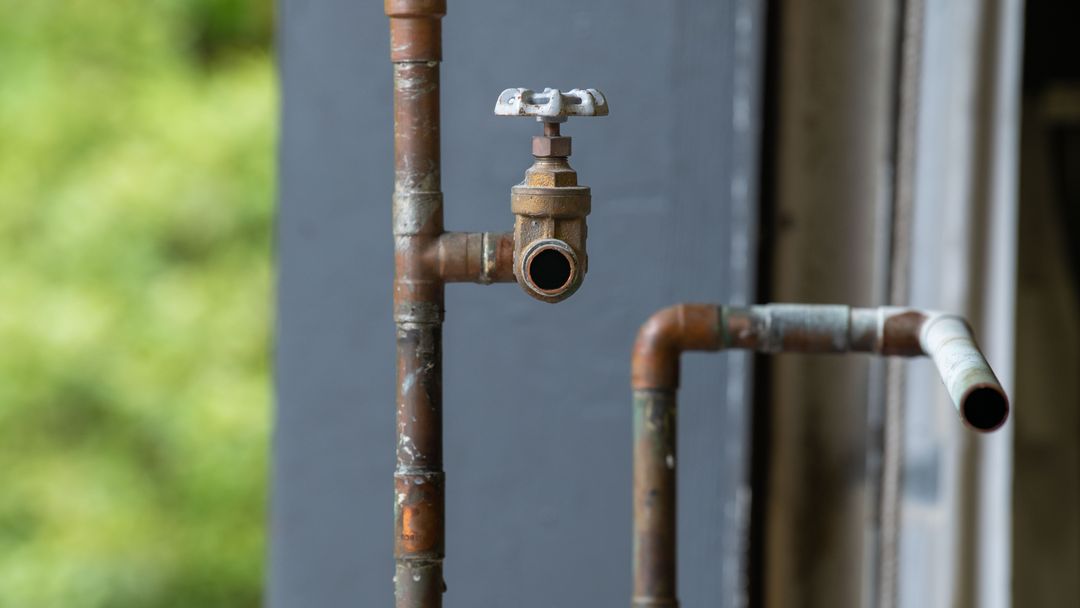
Hose bibs, valves and exposed unions. Handles seize, stems weep, and a vacuum breaker on an outdoor tap stops sealing. These are cheap parts on a short local life cycle, and replacing them with better material rather than the identical item is the whole trick.
Water heater flues and draft hoods. Vent components rust from the inside and the outside in humid salt air, and a corroded flue is a combustion safety issue rather than a cosmetic one. It deserves a look whenever a gas heater is serviced near the bay.
Anode rods work harder in this water. The sacrificial rod in a tank heater is designed to be consumed, and where water is aggressive it goes faster. Checking it at a few years old, rather than discovering the tank has been unprotected for a while, is the cheapest tank life you can buy.
Straps, hangers and pipe supports. Under a raised house or along an exterior wall, the pipe often outlives what is holding it up. A failed hanger lets a line sag, and a sagging drain stops draining properly.
Fixture finishes go too. Trim in a bathroom that gets salt air through open windows pits early. It is cosmetic, but it is worth knowing before choosing a finish.
Washing machine and heater connectors deserve attention. Braided stainless supply hoses are marketed as permanent and are not, particularly in humid salt air where the braid corrodes while the rubber core ages underneath. They are inexpensive, they fail without warning, and they sit next to things that do not tolerate water.
Boats, fishing and the bay mean Seabrook houses use their outdoor plumbing hard.
An outdoor shower needs a drain plan and a freeze plan. Where the water goes matters as much as where it comes from, and the supply needs isolating and draining before a hard freeze because nothing outdoors here survives a burst on its own.
Rinse stations want backflow protection. Any hose that may sit in standing water, a bucket or a livewell needs a vacuum breaker so nothing is drawn back into the house supply. It is a small fitting doing a serious job.
Specify for the location, not the catalogue. Better grade fasteners, brass or resistant stainless where metal is exposed, dielectric separation where dissimilar metals meet, and a rinse of exterior fittings with fresh water now and then. None of it is expensive; all of it extends life meaningfully.
Inspect on a schedule rather than waiting. A twice yearly walk around the outside of the house, looking at every exposed fitting and support, catches most of this while it is still a part swap.
Fresh water rinse lines earn their keep. A dedicated hose run to where boats and gear get washed down, with its own isolation valve indoors, means the line can be shut and drained without disturbing the rest of the house. It also keeps salt off the fitting that is hardest to reach when it finally seizes.
The phone is answered around the clock, holidays included. Tell us whether the problem is an exterior fitting, something under a raised house, or an appliance, and roughly how close to the water you are. Exposure genuinely changes what we bring.
Seabrook and the bayside side of Harris County are on our daily route, with overnight dispatch. We replace exposed parts with material suited to the location rather than like for like, and we check flues and anodes as a matter of course on coastal heater work.
FAQ
Salt deposits hold moisture against the metal, so an exposed fitting spends most of its life damp. Replacing a failed bib with the identical cheap item just restarts the same clock, which is why material choice matters at replacement.
It is what happens when two different metals touch in salty, damp conditions and one corrodes sacrificially. If you have brass against galvanised steel or mixed fasteners outside, you probably do, and dielectric separation is the fix.
Only the more resistant grades. Cheaper stainless pits and stains in marine air, and that shows up first on small exposed fasteners and clamps, which are exactly the parts you do not want failing.
Sooner than the manual suggests. The rod is meant to be consumed, and aggressive water uses it faster, so having it inspected within the first few years is what keeps the tank itself protected.
Yes, and it is a safety item rather than a cosmetic one. Corroded vent components can leak combustion products, so a rusty flue or draft hood near the coast should be assessed before the next season of use.
Yes. Any hose that might sit in standing water, a bucket or a livewell can siphon back into the house supply, and a vacuum breaker on that tap prevents it for very little money.
Isolate it and drain it. Exterior plumbing here has no protection of its own, and an outdoor shower or rinse station is usually the first thing to burst on a hard freeze night.
Largely, yes. Rinse exposed fittings with fresh water occasionally, keep coatings intact, and walk the outside of the house twice a year. Catching a weeping stem early keeps it a part swap.
Services
Exterior taps, stems and vacuum breakers.
About this serviceFlues, draft hoods and anode rods.
About this serviceSupports and exposed runs under raised houses.
About this serviceIsolating outdoor showers and rinse stations.
About this serviceWhen corrosion has outrun repair.
About this serviceOvernight dispatch on the bayside.
About this serviceTalk to someone now
Tell us how close to the water you are and which fittings are failing. We specify replacements for this exposure rather than swapping like for like.
Call about corroded fittings or exterior plumbing