Gas Line Services
The branch to the hearth, sized and tested.
About this serviceDallas-Fort Worth
Nearly every house out here has a gas fireplace, and almost nobody thinks about it between November and the first cold snap. It is a gas appliance on a branch of your house's fuel system, and the few minutes of attention it wants each year are the difference between a pleasant evening and a call we would rather not take.
24/7 dispatch · Aledo · Parker County
Three different things get called a gas fireplace and they have different rules.
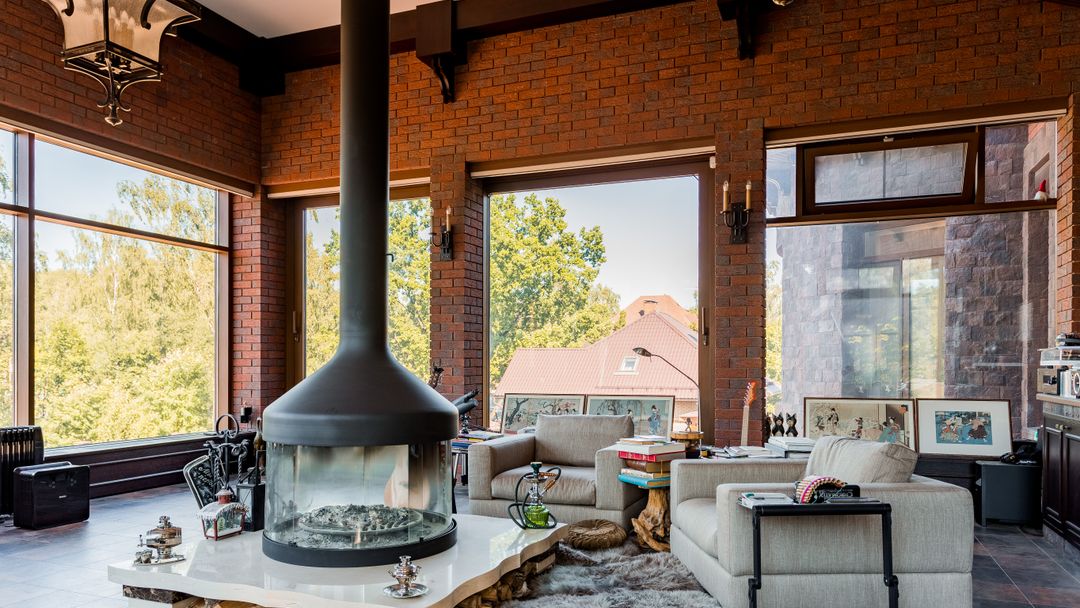
A log set in an existing masonry fireplace. Decorative, burning into a chimney that stays open. It gives very little heat to the room because most of it goes up the flue, and the damper has to stay open when it is running.
A sealed insert or direct vent unit. A closed combustion chamber with glass at the front, drawing air from outside and venting outside. This is the one that actually heats a room, and the glass is genuinely hot rather than warm.
An unvented appliance. Burns in the room with no flue at all. They are efficient by definition, since nothing goes up a chimney, and they put every product of combustion, water vapour included, into the room. They have room size requirements and restrictions, and whether one is appropriate is a question worth asking rather than assuming, particularly in a bedroom or a small closed space.
If you have moved into a house and do not know which of the three you own, that is the first thing to establish, because the maintenance and the safety questions differ completely.
The branch to a fireplace is often the oldest, longest and thinnest run in the house, and it was sized for what was there when the house was built. Swapping a decorative log set for a heating insert can double the demand on that branch, and a line that is undersized does not announce itself: the appliance simply underperforms, particularly when the furnace and the water heater are also running.
The key valve is the part people ask about most. It should be in the room, reachable, and clearly a fireplace valve rather than something anonymous in a floor plate. If the key has been lost, which happens in every second house we visit, get another before you need it.
The connection at the appliance matters too. A flexible connector has a service life and a correct routing, and the joints either side of it want testing rather than assuming. An odour of gas is never a fireplace enquiry. Everyone out of the building first, the utility's emergency number dialled from the yard or a neighbour's, and nothing touched on the way, including light switches and the garage door opener.
Before the first cold night, not during it. The list is short: test the line and connection for tightness, check the pilot or ignition system, look at the burner and the logs for cracking and correct placement, confirm the damper arrangement matches the appliance, check the venting where there is any, and clean the glass and the firebox.
Log placement is a real item rather than an aesthetic one. Ceramic logs sitting in the wrong position interfere with the burner and produce soot, and soot in a gas appliance is a sign that something is wrong rather than a normal by-product.
For unvented units, the oxygen depletion sensor is the component that matters and it has to work. If a unit is shutting down repeatedly, that is the sensor doing its job, not a fault to be bypassed.
Carbon monoxide alarms belong in this conversation. Any house with gas appliances should have them, on every floor with a sleeping area, and tested at the same time of year as everything else here.
We do fireplace checks through October and November, and we would rather do them then than in the first week of December when everyone discovers the pilot will not light. The visit covers the gas line, the valve, the appliance and the alarms, and we will tell you plainly if what is installed is not appropriate for the room it is in.
Aledo, Willow Park, Annetta and the rest of eastern Parker County are on our route, and if a job turns out to be chimney work rather than gas work we will say so rather than charging you to find out.
FAQ
The gas side is. Pilot assemblies, thermocouples, valves and the line itself are what we handle. If the fault turns out to be a chimney or a flue liner, that is a sweep's work and we will tell you so.
Easily, and it is worth doing before you need it. It is also worth checking that the valve itself still turns, since one that has not moved in five years sometimes does not.
Open while it is burning, and on many installations the damper is fixed permanently open for exactly that reason. A sealed insert is a different appliance and the question does not apply to it in the same way.
They are permitted with conditions, including room size and restrictions on where they can be installed, and they put combustion moisture into the room. If yours is in a bedroom or a small enclosed space, it is worth having someone confirm the installation is appropriate.
Beyond the appliance itself, the question is whether the gas branch will carry the increased demand and whether the venting arrangement suits the unit. Both should be checked before you buy rather than after delivery.
No. Gas should burn cleanly, and sooting usually means logs are out of position, the burner needs attention, or the appliance is not getting the air it needs. It is worth looking at rather than wiping off.
Annually, before the season. It takes under an hour and most of what it finds is minor if it is found early.
Get out first and make the utility's emergency call from outside the building. Touch nothing electrical on the way, and do not go back in to close the fireplace valve. Once the utility has made it safe, we can look at what caused it.
Nearby
Services
The branch to the hearth, sized and tested.
About this serviceLeave first, call the utility, then call us.
About this serviceThe other appliance competing for the same supply.
About this servicePressure testing a run before the season starts.
About this serviceThe pre-season visit that covers more than the hearth.
About this serviceParker County houses on long private runs.
About this serviceTalk to someone now
An hour in October beats a cold evening in December with no pilot.
Book a pre-season check