Drain Cleaning
Area drains, French drains and blocked runs.
About this serviceDallas-Fort Worth
On a larger Argyle lot, the water that causes the most expensive damage is not in a pipe. It is rain sitting against a foundation, pooling in a low corner, or running off a neighbour's slope into your yard. Storm drainage is a separate system from your sewer, and the single most important rule about it is that the two must never meet.
24/7 dispatch · Argyle · Denton County
This is the rule that governs everything else on the page, and it is broken surprisingly often.
Storm water and sanitary sewer are separate. Your sewer lateral carries waste to a treatment works sized for that flow. Rain is a vastly larger volume, and putting it into a sanitary line overwhelms the system, causes backups and is a violation.
A downpipe tied into a cleanout is the classic mistake. It looks convenient and it means every heavy storm surcharges the drainage in your own house first. If you have inherited one, that is worth correcting rather than living with.
Sump and area drain discharge goes to daylight or a storm system. Somewhere the water can leave without returning, and without becoming a neighbour's problem. Where it goes is part of the design rather than an afterthought.
Yard drainage is usually not permitted work, and it still has rules. Discharging onto a neighbour's property or across a footpath causes disputes and sometimes liability, and it is worth getting right the first time.
Foundation damage is the reason to care. In this clay, water repeatedly soaking and drying beside a foundation is what moves it, and slab movement is what breaks the drainage buried under the house. Yard drainage is foundation protection.
Know what your own low point drains to. On a larger lot the water leaving your property has to arrive somewhere legitimate, whether that is a roadside ditch, an easement or a creek, and the route is worth establishing before a system is designed around it. A drain that discharges into a dead end simply moves the puddle.
Each of these does a different job, and most yards with a problem have the wrong one.
Start with the gutters and the downpipes. A roof sheds an enormous volume, and discharging it two feet from the wall is the most common cause of a wet foundation. Extending downpipes properly is the cheapest fix available and should always come first.
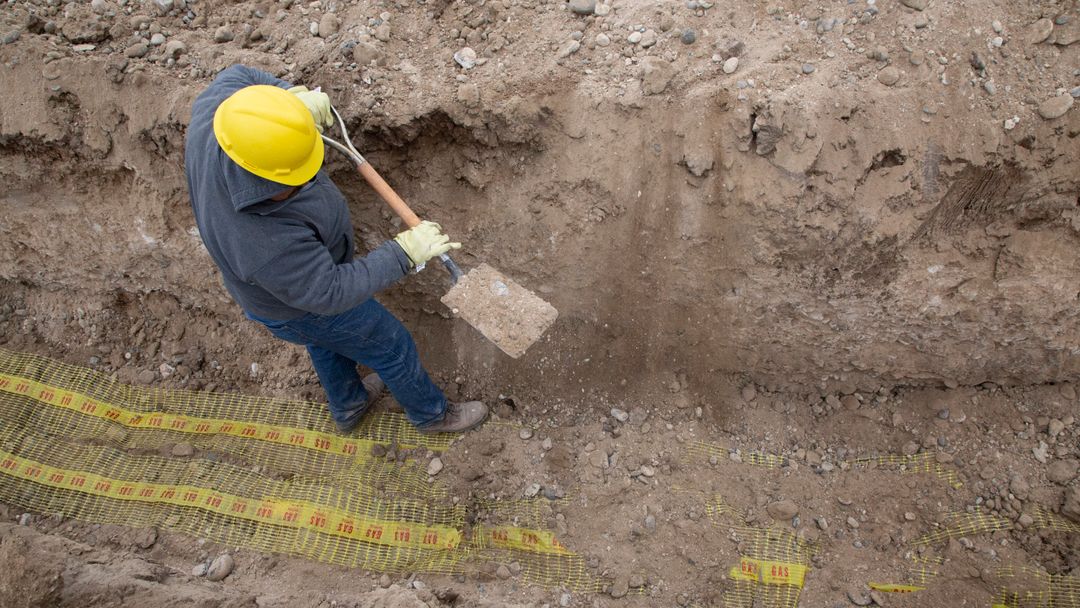
An area drain collects water that has already pooled. A grated inlet at a low point, piped to daylight, is what deals with a patio or a yard corner that holds water after every storm. It handles surface water.
A French drain intercepts water in the soil. Perforated pipe in gravel with a filter fabric collects water moving through the ground rather than across it, which is a different problem from a puddle. Confusing the two is why drainage work sometimes fails to change anything.
Grading matters more than pipe. Ground that slopes away from the house for the first several feet does more than any installed drain, and where the grade runs the wrong way, no amount of pipe fully compensates.
Sizing and fall still apply. Drainage pipe needs consistent fall and adequate diameter, and it needs a cleanout or an accessible end so it can be flushed. A drain that cannot be cleaned silts up and stops working.
Keep it clear. Leaves, mulch and silt block grates and pipe, and a system that is never checked is a system that will be blamed for not working.
Do not let landscaping undo it. New beds, raised borders and mulch piled against the house routinely reverse a grade somebody paid to correct, and the drainage gets blamed. Anything that changes the ground level within a few feet of the wall is worth thinking about as drainage work.
Standing water has several causes and they need different answers.
Watch it during a storm, not afterwards. Where water arrives from, how fast, and where it goes tells you far more than the puddle it leaves. Ten minutes in the rain is the best diagnostic available.
Water that appears without rain is a plumbing leak. A wet patch in dry weather is a supply or irrigation failure rather than drainage, and those are found with a meter test, not a shovel.
Water from uphill is a different conversation. Runoff arriving from a neighbouring property or a street is intercepted rather than collected, and it is worth establishing before designing anything.
Soggy ground over a septic field is not drainage. On a property with a septic system, saturated ground in the field area is a treatment problem and needs looking at as one.
Check whether the low point is the problem or the symptom. Water collects at the lowest point, which is often nowhere near the cause. Following it uphill is how you find what to fix.
Do the cheap things first and measure the result. Extend the downpipes, correct the grade in one spot, and see what remains. Installed drainage should be the answer to what is left, not the first move.
Photograph it while it is happening. A photograph of standing water with the date, taken during the storm, is worth far more than a description afterwards, both for designing the fix and for any conversation with a builder or a neighbour.
The phone is answered around the clock, holidays included. Tell us whether the water appears only after rain or in dry weather too, where it collects, and whether any downpipe or drain is tied into a sewer cleanout. That last one we would want to know about immediately.
Argyle and this part of Denton County are on our daily route, with overnight dispatch. We separate storm water from sanitary drainage wherever we find them joined, start with gutters and grade before selling pipe, and leave installed drainage with access so it can be cleaned.
FAQ
No. Rain is a far larger volume than a sanitary line is designed for, and tying storm water into it causes backups and is a violation. If a previous owner did it, it is worth correcting.
An area drain is a grated inlet that collects water which has already pooled on the surface. A French drain is perforated pipe in gravel that intercepts water moving through the soil. They solve different problems.
To daylight or an appropriate storm system, somewhere the water can leave without coming back or becoming a neighbour's problem. Discharge onto adjoining property causes disputes and sometimes liability.
Extending the downpipes so roof water lands well away from the wall. A roof sheds an enormous volume, and discharging it a couple of feet from the foundation causes more trouble than any other single thing.
Because in this clay, water soaking and drying repeatedly beside a foundation is what moves it, and slab movement is what breaks the drainage buried underneath. Yard drainage is foundation protection.
No, that is a leak, either supply or irrigation. It is found with a meter test rather than a shovel, and treating it as a drainage problem wastes the excavation.
Yes. Silt and roots gradually reduce it, and it needs an accessible end or a cleanout so it can be flushed. A drain with no access silts up and quietly stops working.
It can be intercepted rather than collected, which is a different design. Establishing that the source is off your property matters before anyone installs anything, because the solution sits at your boundary rather than at the puddle.
Nearby
Services
Area drains, French drains and blocked runs.
About this serviceSeparating a storm connection from the sanitary lateral.
About this serviceTesting drainage under a slab that has moved.
About this serviceWet ground when it has not rained.
About this serviceMoving a line away from a corner that stays wet.
About this serviceOvernight dispatch in Denton County.
About this serviceTalk to someone now
Tell us whether it appears only after rain, and whether any downpipe is tied into a sewer cleanout. We start with gutters and grade, not with pipe.
Call about yard drainage or standing water