Emergency Plumbing
Water stopped first, on the phone if needed.
About this serviceDallas-Fort Worth
Duncanville's housing stock is mostly 1950s through 1970s, which means a great many of the shutoff valves in this city are original. The part of an emergency that decides how bad it gets is not how fast a plumber arrives. It is whether the water can be stopped in the first three minutes, and on a sixty-year-old house that depends entirely on a valve nobody has touched since it was installed.
24/7 dispatch · Duncanville · Dallas County
Most houses here have three levels of isolation, and knowing which one to reach for, in what order, is the whole of the skill.
The fixture stop. The small valve behind a toilet or under a sink. This is the right answer for a running toilet or a dripping supply line, and it is the one that fails most often, because a chrome-plated multi-turn stop from 1968 that has never been operated will very frequently either refuse to turn or refuse to seal once it has been turned.
The house valve. The main shutoff on your side of the meter, controlling the whole building. On Duncanville houses it is usually on the exterior wall near the hose bib closest to the meter, sometimes in a small access box in a flower bed, occasionally in the garage near the water heater. This is the valve you want for a burst line, a failed heater or water appearing where it should not be. Find it now, not during the event.
The curb stop at the meter. Inside the meter box at the kerb, this is the utility's valve. It works, but it needs a meter key, the box lid is often set in soil and grass, and the valve itself may need a wrench rather than fingers. Treat it as the backstop for when the house valve has failed, which is exactly the situation many people find themselves in.
Gas has its own shutoff and its own rule. There is a valve at the gas meter that needs a wrench. If you ever turn gas off, it does not go back on without a competent relight of every appliance. That is not a do-it-yourself step and there is no shame in leaving it to the utility or a plumber.
Valves in this age of house fail in predictable ways, and every one of them is discovered at the worst possible moment.
Gate valves seize. The multi-turn valve with a round handle, standard on houses of this era, works by lowering a brass wedge into the flow. Sit still for thirty years in hard-ish water and the stem corrodes, the packing hardens and the wedge cements itself in place. The handle then either will not move, or spins freely because the stem has snapped off inside.
They also fail open. A gate valve that closes but does not seal is common. You turn it, the water slows, and it keeps dribbling, which on a burst line is not much better than nothing. That is the wedge having corroded away from the seat.
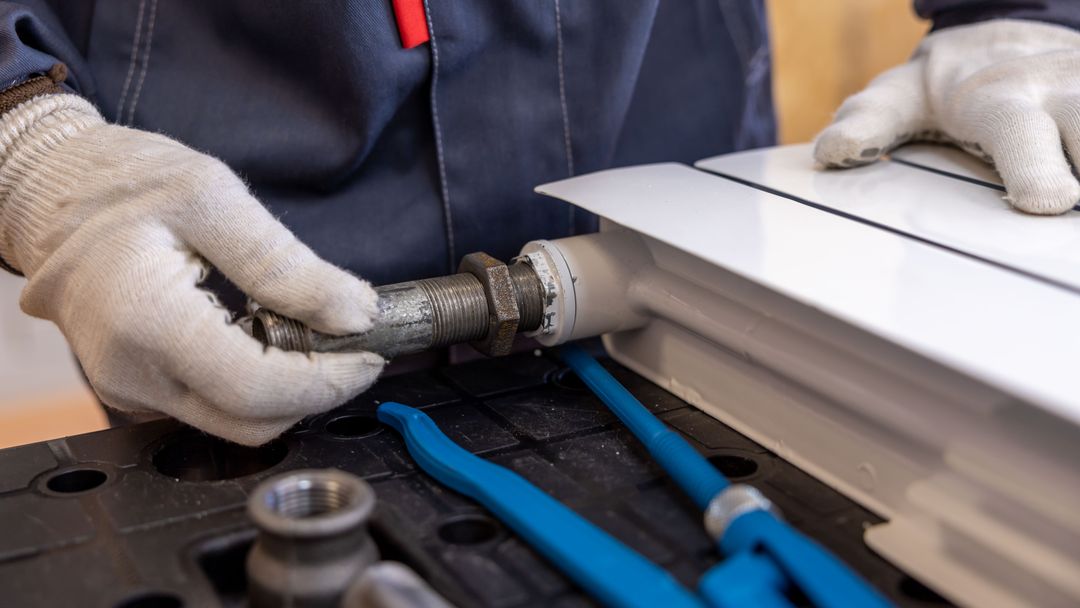
The handle snapping is the common outcome. Forcing a seized valve usually breaks the handle or shears the stem, and then you have both a leak and no way to stop it. If a main valve resists more than gentle firm pressure, stop and go to the meter instead. Trying harder is how a manageable problem becomes a flooded house.
Old stops seep after being closed. A fixture stop that has sat open for decades often seals badly once moved, and will weep afterwards. That is not the plumber breaking your valve. It is a valve at the end of its life revealing itself, and it is why a straightforward faucet swap sometimes turns into replacing the stops as well.
This is the cheapest plumbing work available to a Duncanville homeowner and almost nobody does it. Pick a Saturday and go through the list once.
Find the house valve and test it. Close it fully, check that every tap in the house actually stops, then open it again. If it turns easily and seals completely, you are in good shape. If it groans, weeps, or does not stop the flow, you have found a problem on a day when it costs you an appointment rather than a floor.
Exercise the fixture stops. Close and open each toilet and sink stop. Anything that will not move, or that weeps afterwards, goes on a list. Replacing four stops on a planned visit is a modest job. Replacing one during an overflow is not.
Buy a meter key and clear the box. A meter key costs very little at any hardware shop. Lift the lid, make sure you can see the meter and the valve, clear the soil and grass that has grown over it, and check the lid comes up without a spade. Leave the key somewhere everyone in the house knows about.
Label things. A tag on the house valve and a written note inside the electrical panel door or on the inside of a cabinet. This exists for the person who is home when you are not, including a house sitter or a teenager.
Replace gate valves with quarter-turn ball valves. A ball valve turns ninety degrees, either open or shut, seals reliably and will still work in twenty years. Swapping the main house valve is typically an hour's work and it is the single best value upgrade in an older house. Do it as planned work rather than as part of an emergency.
Keep this sequence somewhere findable. The order matters more than the speed.
One, stop the water at the nearest working valve. Fixture stop if the problem is at a fixture, house valve if it is anything larger or you are not sure. If the house valve fails, go to the meter with the key. Do not spend four minutes wrestling a seized handle.
Two, kill power to the water heater if the heater is involved. Breaker for electric, gas control to the pilot or off position for gas. A heater that keeps firing after the water has stopped is a second problem.
Three, open the lowest taps in the house. This drains the pipes down and drops the pressure at the break, which noticeably reduces what keeps coming out after you have closed the main.
Four, get water away from anything that matters. Towels and a wet vacuum beat a mop. Lift what you can. If water is near the panel or near outlets, leave it alone and keep people out of the room.
Five, then call, and be able to say what you turned off. Whether the main closed fully, whether it is still dribbling, and where the water is coming from, all change what gets sent and what we bring. That information is worth more than a detailed description of the noise.
The phone is answered around the clock, holidays included. On an active leak the first thing we do on the phone is get the water stopped, including talking you to the meter box if the house valve has failed. That happens before anything about scheduling.
Duncanville sits inside dense southwest Dallas County coverage, so same-day is normal and after-hours dispatch runs every night of the year. On any visit we will show you where your shutoffs are and tell you honestly which ones are past their service life, because on a house of this age that list is usually short and always worth having.
FAQ
On most Duncanville houses, on the exterior wall nearest the meter, often beside the hose bib, sometimes in a small access box in a bed, occasionally in the garage near the heater. If you cannot find one, the meter box at the kerb is your fallback.
Stop pushing. Forcing a seized gate valve usually shears the stem or snaps the handle, and then you have a leak and no shutoff at all. Go to the meter box with a meter key and close the curb stop instead, then have the house valve replaced.
Turning the curb stop off in an emergency is reasonable and normal. Use a meter key rather than pliers, turn gently, and do not disturb the meter itself. If it resists, call the utility rather than forcing it.
Yes, and it is far better to find a failed valve on a dry Saturday than during a burst. Close it, confirm the taps stop, open it again. If it seizes or weeps, you have discovered a scheduled job rather than an emergency.
A gate valve turns many times and lowers a wedge into the flow, and it seizes or fails to seal as it ages. A ball valve turns a quarter turn, is either open or shut, and keeps working. Swapping the main house valve to a ball valve is about an hour of work.
Almost certainly not. A stop that has sat open for forty years often will not seal properly once operated. The valve was already at the end of its life and moving it revealed that, which is why replacing old stops is frequently part of any fixture work.
Only if the gas system or a gas appliance is involved, or if you are told to. Gas off means every appliance needs a competent relight afterwards, so it is not a casual step. Water first, and if you smell gas, leave and call from outside.
It drains the pipework down and drops the pressure at the break, so much less water continues to come out. Open the lowest fixtures in the house, which will usually be a bath or an outside bib.
It is one of the smaller jobs on the list, usually an hour or so, and the water is off for that time. On a house of this vintage it is the upgrade with the best return, because it is the one thing that limits the damage from everything else that can go wrong.
Duncanville is inside well-covered Dallas County territory, so same-day on urgent calls is normal and there is dispatch overnight. When you call we will get the water stopped first, over the phone if necessary, before anything else is discussed.
Nearby
Services
Water stopped first, on the phone if needed.
About this serviceWhen the shutoff comes too late to matter.
About this serviceOld stops usually go with the fixture.
About this serviceHouse valve and service line replacement.
About this serviceIsolating and killing power before anything else.
About this serviceFinding it once the water is safely off.
About this serviceTalk to someone now
If the answer is no, or if you know it and it does not turn, that is a scheduled job today and an emergency later. Call and we will test it, label it, and tell you straight whether it needs replacing.
Call and describe the problem