Leak Detection
Confirm and quantify before anyone searches.
About this serviceDallas-Fort Worth
The call we take most often from Hurst does not start with water on the floor. It starts with a bill. Usage doubled, or tripled, nothing looks wrong, and the homeowner is caught between a utility that wants proof and a plumber who wants to be paid to find something that may not be there. That situation has a method, and working through it in the right order saves both the money and the argument.
24/7 dispatch · Hurst · Tarrant County
A high bill is data, and most of the answer is already on it. Before paying anybody to look for a leak, spend ten minutes with the last fourteen months of statements.
Work in units, not dollars. Rates change, tiers change, and a bill can rise substantially with no change in usage at all. Find the consumption figure, usually in thousands of gallons or in hundreds of cubic feet, and compare that number across months. If gallons are flat and dollars are up, you have a rate question for the city, not a plumbing problem.
Compare to the same month last year, not to last month. July against June tells you almost nothing in North Texas, because irrigation, pool evaporation and guests all load the summer. July against last July is a real comparison.
Find your baseline. The lowest two or three months of the year, typically January and February, are close to indoor-only usage for your household. That number is your floor. A leak shows up as the floor rising, which is why a winter bill that has crept up is more diagnostic than a summer bill that has spiked.
Separate irrigation from the house if you can. Where there is a second meter or a deduct meter for irrigation, the split is already done for you and it is the first place to look. Where there is not, an irrigation controller that has quietly reverted to a default programme after a power cut is one of the most common causes of a doubled summer bill in this part of Tarrant County, and it costs nothing to check.
Rule out the obvious consumers. A running toilet flapper can pass hundreds of gallons a day silently. A water softener stuck in regeneration can run continuously. A pool autofill valve with a failed float does the same. None of these are leaks in the pipe sense, and all three are cheaper to find than a slab leak.
Everyone has heard "go and look at your meter." Done casually it produces arguments. Done properly it produces evidence a utility will accept and a plumber can work from.
Get a real still reading. Shut off every fixture and appliance that uses water, including the ice maker, the softener and the irrigation controller, and leave it that way for a measured period. Photograph the meter face with a timestamp at the start and at the end. Most modern meters have a low-flow indicator, a small dial or triangle that turns on any movement at all. If it moves with the house genuinely off, water is leaving the system.
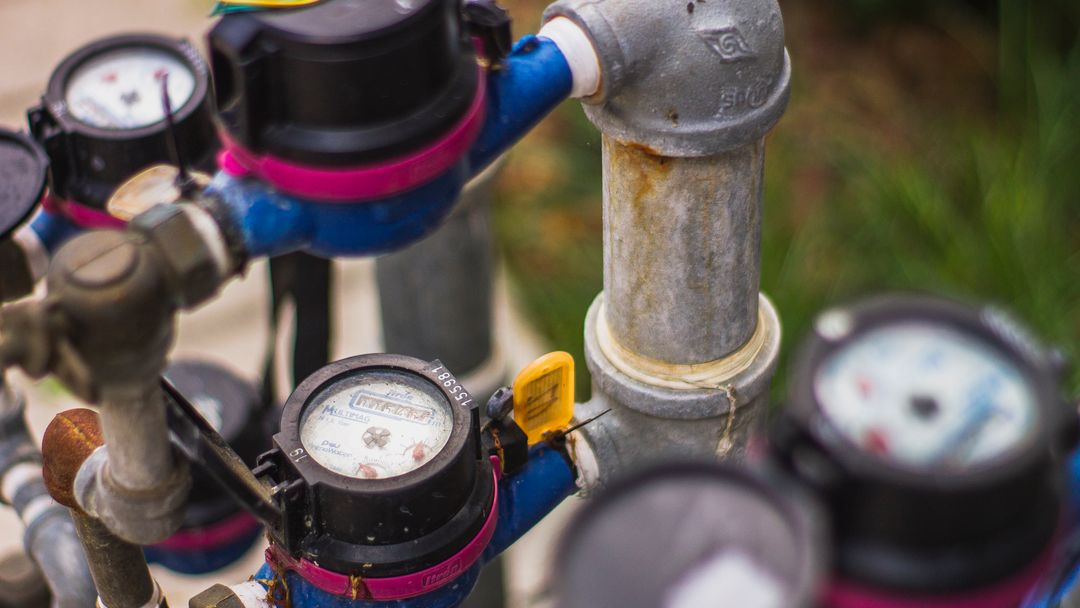
Quantify it, do not just confirm it. Two readings an hour apart give you a rate. A rate lets you work out whether the loss actually accounts for the extra on your bill. Surprisingly often it does not, and that mismatch is itself information: it means there are two things going on, or that the spike was a one-off event rather than an ongoing leak.
Then split the house from the yard. Close the main shutoff at the house and take a third reading. Still moving means the loss is between the meter and that valve, which is the yard line. Stopped means it is inside or under the house. That one step decides which specialist gets called and stops a lot of wasted searching.
Homeowners raise this constantly and it is usually dismissed too fast. Meters do fail, but they fail in a specific direction and that is worth knowing before you spend money on a test.
Mechanical meters slow down as they age, they do not speed up. Worn internals under-register. That means an old meter is far more likely to be billing you less than your actual usage than more. A sudden jump in registered usage on a twenty-year-old meter is therefore very rarely the meter reading high.
A meter change is a common trigger, and not because of accuracy. When an old under-registering meter is swapped for a new one, recorded usage rises even though nothing in the house changed. The new number is the accurate one. This catches people out every time a utility runs a replacement programme through a neighbourhood.
Estimated and skipped reads distort a single month. A missed read followed by a catch-up read puts two months of usage on one bill. If one bill is enormous and the following one is unusually small, that is the signature, and it is a billing correction rather than a plumbing fault.
You can ask for the meter to be tested. Utilities will generally test or replace a meter on request, sometimes at the customer's cost if it proves accurate. Ask what the policy is before you commit. Do the meter test above first, because a meter that shows zero movement with the house off is working correctly by definition.
Most Texas utilities have some provision for a one-time leak adjustment. They are not obliged to volunteer it, the terms vary, and the common reason a request fails is not the leak but the paperwork.
Ask specifically, and ask early. Use the words leak adjustment or high bill adjustment when you contact billing, and ask what the window is. Many programmes require the request within a set period of the bill being issued, and a claim made three months later is simply out of time.
The repair invoice is the document that matters. It needs to be dated, it needs to describe the fault found and the work done, and it needs to be specific. "Plumbing repair, paid in full" is worth very little. "Replaced failed section of three-quarter-inch copper yard line at eighteen feet from meter, leak confirmed by meter test, line pressure tested after repair" is worth a great deal.
Keep the before and after readings. Timestamped meter photographs from before the repair and a still meter afterwards are the cleanest proof available that the loss existed and that it stopped. Take them even if nobody asks.
Know what is usually excluded. Adjustments generally cover concealed leaks, not irrigation left running, not a hose left on, not a filling pool. They are usually once per property per several years. The sewer side is sometimes adjusted too, on the argument that leaked water never reached the sewer, and that part frequently has to be asked for separately.
Fix it first, then apply. Almost every programme requires the leak to be repaired before an adjustment is granted, which is the opposite of the order most people attempt.
The phone is answered around the clock, holidays included. On a high-bill call we start with the meter rather than with equipment: confirm the loss, quantify it, and split yard from house before anyone proposes a search. If the meter is still with the house off, we will tell you that plainly and not sell you a leak hunt.
Hurst sits in the middle of dense Tarrant County coverage, so same-day is normal and after-hours dispatch runs every night. The invoice you get will describe the fault and the repair in the detail a utility adjustment needs, because a vague invoice costs you the adjustment.
FAQ
Routinely. A yard line leak in Tarrant County clay can run for weeks without surfacing, and a toilet passing water into the bowl is silent and invisible. The meter test is what separates a real loss from a billing or usage explanation, and it costs nothing.
It is the least likely explanation. Mechanical meters wear and under-register as they age, so they tend to bill low rather than high. If your meter was recently replaced, the new higher number is generally the accurate one and the old one was undercharging you.
An hour is plenty and gives you a usable rate. Photograph the meter at the start and end with timestamps, and make sure the ice maker, the softener and the irrigation controller are all genuinely off, because all three run on their own schedule.
It might be a real small leak, or it might be thermal expansion bleeding back through a fixture. Repeat the test at a different time of day. A consistent slow movement across two tests is worth investigating; a single observation is not conclusive.
Often, but you have to ask for it by name and usually within a limited window after the bill. Terms differ by utility, it is typically once per property, and it almost always requires the repair to be completed first with a detailed invoice as proof.
The date, the specific fault found, where it was, and what was done about it. Ask for the meter test result to be noted on it too. A one-line invoice that just says plumbing repair is the most common reason an otherwise valid claim gets refused.
Sometimes, because water from a leak in a supply line never entered the sewer system. It is frequently handled as a separate request rather than automatically, so raise it explicitly when you apply.
That pattern usually means an estimated or missed read followed by a catch-up read, so two months of usage landed on one statement. It is a billing artefact rather than a leak, and the utility can confirm it from the read history.
Compare it to the same month a year earlier rather than to spring. If summers are consistently high, the cause is almost always irrigation, and a controller that reset to a default programme after a power interruption is a very common culprit here.
Diagnostic time is normally billable, which is exactly why the meter test comes first. If the meter is still with the house shut off, there is no ongoing leak to find, and we would rather tell you that on the first visit than search for something that is not there.
Nearby
Services
Confirm and quantify before anyone searches.
About this serviceWhen the meter says the loss is under the house.
About this serviceYard line losses between meter and house valve.
About this serviceThe silent consumer behind most bill spikes.
About this serviceUnits stuck in regeneration run continuously.
About this servicePressure and expansion faults that mimic a leak.
About this serviceTalk to someone now
Start with the meter, not with equipment. Call and we will confirm whether water is actually leaving the system, split yard from house, and write the invoice your utility will accept.
Call and describe the problem