Burst Pipe Repair
Supply hoses and failures behind appliances.
About this serviceDallas-Fort Worth
The laundry room causes more water damage per square foot than any other room in a Kennedale house. It holds two hoses under constant pressure, a drain asked to swallow twenty gallons in ninety seconds, and it is usually the room nobody is standing in. Every one of those failures is cheap to prevent and expensive to discover.
24/7 dispatch · Kennedale · Tarrant County
Two hoses sit at full mains pressure every hour of every day, and they are not permanent components.
They fail suddenly, not gradually. A washing machine supply hose does not usually weep first. The reinforcement gives way and the hose delivers everything the meter can supply until somebody closes a valve, which is why the damage is measured in rooms rather than inches.
Rubber hoses have a short honest life. The plain black rubber hoses supplied with machines harden and crack with age and heat. Five years is a reasonable replacement interval and almost nobody keeps to it.
Braided stainless is better, not permanent. The braid resists bursting and the rubber core inside still ages. Buying the better hose buys time; it does not remove the maintenance item.
Close the valves if the machine will sit unused. A house left for a fortnight with both hoses pressurised is carrying a risk for no benefit. Single lever valves that close both at once make this something people actually do.
Leave a proper loop and check the connections. A hose kinked hard against the wall behind a machine pushed back too far fails at the kink, and overtightened fittings crack the plastic inlet on the machine itself.
Keep the machine off the hoses. A washer pushed hard back against the wall crushes the connections and the loop behind it, and vibration during a spin cycle works at whatever is already stressed. Two inches of clearance and a hose that curves rather than kinks is the whole of the maintenance.
A laundry drain has to do something no other drain in the house does, which is take a large volume very quickly.
The standpipe has a right height. Too short and the machine's pump overwhelms it and it overflows. Too tall and the pump struggles. It is a dimension with a correct answer, not a matter of what fitted behind the cabinet.
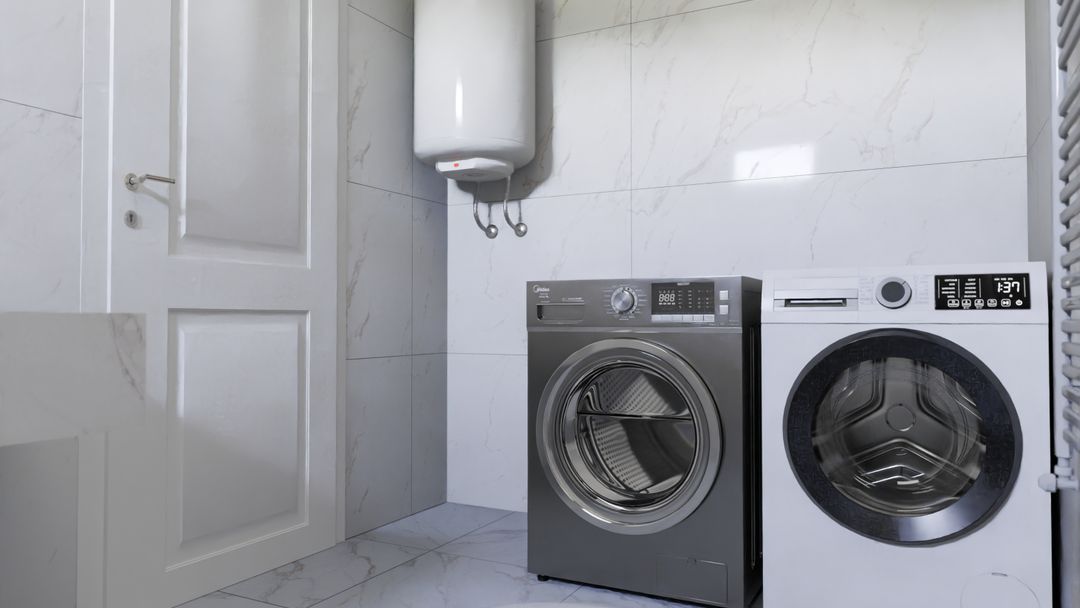
It needs a trap, and the trap needs venting. A standpipe with no vent siphons and gurgles, and a trap that loses its seal lets drain odour into the room. A laundry that smells is usually a venting fault rather than a cleaning one.
Do not push the hose too far down. A discharge hose shoved deep into the standpipe seals it and causes the machine to siphon, which means it drains while it is trying to fill. It should sit loosely, no deeper than a few inches.
Lint is the blockage, every time. Laundry drains clog with lint and detergent residue rather than solids, and the deposit builds over years. A lint trap on the discharge hose is a few dollars and prevents most of it.
An overflow during the spin cycle is a partial blockage. The drain copes with a slow fill and not with a fast discharge, which is exactly what a narrowing line does. It is a warning, not a one off.
Detergent choice matters more than people expect. Too much detergent, or a high suds product in a machine designed for low, leaves residue that combines with lint into a deposit that coats the drain. It is a slow version of grease in a kitchen line, and it responds to the same treatment.
Where the room sits in the house decides how bad a failure gets.
An upstairs laundry needs a pan and a drain. A pan under the machine with a piped drain to somewhere visible turns a hose failure into a puddle instead of a ceiling. Without the drain, the pan just holds the first two gallons.
Leak detection is worth it where water has somewhere to go. A sensor on the floor that closes a valve, or simply sounds, costs very little compared to a downstairs ceiling. On a second floor laundry it is the single best thing you can add.
A recessed box tidies the wall and protects the hoses. Valves and the standpipe in a proper recessed outlet box mean the machine can sit close to the wall without the hoses being crushed behind it.
Moving a laundry is a drainage job, not a supply job. Water can be run almost anywhere. The drain needs fall and a vent, and that is what decides whether a garage or a closet conversion is straightforward or expensive.
Do not forget the heater sharing the space. Laundry rooms frequently hold the water heater as well, so a failure in either affects both, and the heater deserves its own pan and drain while you are in there.
Check the floor can take it. A front loader on a spin cycle exerts real force, and a floor with any flex turns that into noise, movement and stress on the connections. Levelling the machine properly on a solid floor is part of protecting the plumbing attached to it.
The phone is answered around the clock, holidays included. Tell us whether water came from a hose, from the machine, or up out of the drain, and whether the laundry is upstairs. If it is actively running, close both valves behind the machine before anything else.
Kennedale and this part of Tarrant County are on our daily route, with overnight dispatch. We check standpipe height and venting rather than only clearing the line, and we fit pans and drains on upstairs laundries as a matter of course.
FAQ
About every five years for rubber hoses, and braided stainless still deserves inspection on the same cycle. They fail suddenly rather than weeping first, which is why age matters more than appearance.
Because the drain copes with a slow fill but not a fast discharge. That points to a partial blockage, usually lint and detergent residue built up over years, and it will get worse rather than settle.
Yes. Sealing the standpipe with the hose makes the machine siphon, so it drains while it fills. The hose should sit loosely in the pipe, no more than a few inches down.
If the machine will be unused for a while, definitely. A single lever valve that closes both at once makes it easy enough that people actually do it, which is the whole point.
Usually a venting problem letting the trap siphon dry, or a trap missing altogether. It is a plumbing fault rather than a cleaning one, and it will keep coming back until the vent is sorted.
Yes, with a drain piped to somewhere visible. Without the drain the pan only holds the first couple of gallons, which is not what a burst hose delivers.
Usually, and the deciding factor is drainage rather than water. The drain needs proper fall and a vent, so the route and the elevation are what make it simple or expensive.
A lint trap on the discharge hose and a leak sensor on the floor. Together they cost very little and they address the two failures we are called out for most.
Nearby
Services
Supply hoses and failures behind appliances.
About this serviceLint blockages and slow standpipes.
About this serviceFinding how far a hose failure reached.
About this servicePans and drains in a shared laundry space.
About this servicePressure that shortens hose and valve life.
About this serviceOvernight dispatch in Kennedale.
About this serviceTalk to someone now
If water is running now, close both valves behind the machine first. Then tell us whether it came from a hose, the machine, or up out of the drain.
Call about a laundry leak or drain