Leak Detection
Finding what the monitor says is running.
About this serviceDallas-Fort Worth
Sachse filled in through the 1990s and 2000s with two-storey houses on small lots, and a lot of those houses now have a leak monitor or an automatic shutoff valve on the incoming line, either bought after a bad experience or required by an insurer. They are genuinely good devices. They are also frequently installed in the wrong place, protecting against the wrong thing, or bolted to plumbing that cannot support what they are being asked to do.
24/7 dispatch · Sachse · Dallas County
Almost every conversation about this equipment goes wrong because the two categories get talked about as if they were interchangeable.
Point sensors are pucks on the floor. They go beside the water heater, under a sink, at the washer, behind a toilet, and they alert when they get wet. They are cheap, they need no plumbing work, and they only ever know about water that reaches them.
Flow monitors watch the whole house. Fitted on the main line after the meter, they measure flow and pressure continuously and learn the normal pattern of the house. They detect things no floor sensor ever will: a slow leak inside a wall, a running toilet, an irrigation valve passing, water moving at 3am when nobody is up.
Only some of them can actually stop water. A monitor reports. A shutoff valve closes. Plenty of people believe they have automatic protection when what they have is an alert on a phone that may be on silent. If shutting the water off automatically is the point, the device has to include a motorised valve.
The combination is what genuinely protects a house. A flow monitor with an integral shutoff on the main, plus a handful of point sensors at the specific appliances most likely to dump water quickly. Each covers the other's blind spot.
Neither is a substitute for knowing your own shutoff. Batteries die, wifi drops, power fails, valves need exercising. The device is a layer on top of manual isolation, not a replacement for it.
Location is the whole game with a flow device, and this is the part that gets done casually.
Downstream of the meter, upstream of everything else. A device on the main after the meter and ahead of the first branch sees all household use. Fitted after a branch has already teed off, it is blind to whatever that branch feeds, and on a Sachse house the branch teed off first is often the irrigation or the outdoor bibs.
Irrigation ahead or behind is a deliberate choice. Behind the device, irrigation shows up as huge scheduled flow and is the main cause of false trips. Ahead of it, the monitor never knows about an irrigation leak at all, and that is a leak worth catching. Better devices handle scheduled use properly, and the decision should be made knowingly rather than by whatever was convenient to cut into.
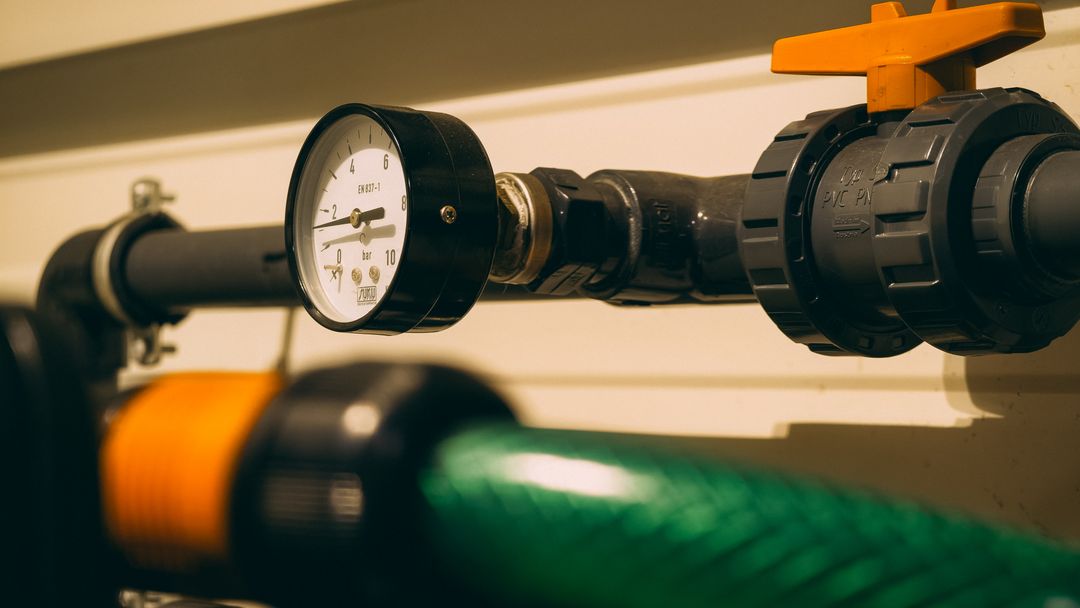
The regulator belongs upstream. These houses run behind a pressure reducing valve, and a flow device reading pressure needs to be on the house side of it to report anything meaningful. A monitor upstream of the regulator reports street pressure and tells you nothing about your plumbing.
It needs straight pipe and access. Manufacturers specify a run of straight pipe either side, and the valve needs to be reachable for the manual override that every one of them has. Buried in a soffit behind drywall is an install that will be cursed later.
Watch the fittings it is mounted between. Cutting into a main means adding joints, sometimes at dissimilar materials, and on a 1990s house that may be PVC, copper and a brass regulator within three feet. Those transitions need doing properly, or the leak protection device becomes the leak. We have replaced more than one of these where the failure was the install, not the product.
Worth knowing before you rely on it, because the gaps are specific and none of them are advertised.
It knows nothing about drains. A blocked main line backing sewage into a downstairs shower involves no supply flow at all. A flow monitor will sit there reporting a perfectly normal day while the house floods.
It cannot see a slab leak clearly. It sees the flow, which is real and useful, but not the location. On these houses a slab leak still needs locating, and the monitor's value is telling you there is continuous flow at 4am rather than where it is.
Water heaters fail in ways it misses. A tank leaking slowly from the bottom seam empties into the pan and out to the drain with no flow anomaly worth flagging, because the fill rate matches normal use. A point sensor in the pan catches it. The flow device may not.
Fast bursts still do damage before it closes. A failed supply line to a washer moves a lot of water in the seconds before detection and closure. The valve massively limits the total, and it does not mean zero water.
It fails silently more often than people expect. Flat batteries in the sensors, a device off the wifi since a router change, an app with notifications disabled, an expired subscription. These systems need a two-minute check a couple of times a year, and virtually nobody does it. A monitor you believe is watching and is not is worse than no monitor, because it displaced your own attention.
The practical side, which is where most of our follow-up calls in Sachse come from.
False trips have real causes. A long bath, filling a pool, a water softener regenerating at 2am, a guest running a shower for twenty-five minutes, a scheduled irrigation cycle the device was not told about. The right response is configuring the thing properly, not raising the thresholds until it would never trip on anything.
Test it once a year, deliberately. Trigger a manual close from the app and confirm the water actually stops at a tap. Run a sensor under a tap and confirm the alert arrives. A valve that has not moved in three years may not move when it matters, and this is a five-minute exercise.
Know the manual override. Every motorised valve can be operated by hand, and you want to have done it once in daylight before you need to do it during a failure with the power out.
Insurers increasingly care, and the details vary. Some offer a premium credit for a monitored automatic shutoff, some require professional installation, some want the model and serial recorded. Keep the invoice and the model number with your policy documents. If a claim ever happens, evidence the device was correctly installed and functioning is worth having.
The plumbing behind it still has to be sound. A monitor on a house with a seized main shutoff, a failed pressure regulator and thirty-year-old braided supply lines is protecting the wrong end of the problem. Fixing the pressure regulator and replacing the supply lines removes causes. The device only ever limits consequences, and doing both is the point.
The phone is answered around the clock, holidays included. If a device has shut your water off, the first questions are what the app reported, whether anything unusual was running, and whether the valve has reopened, because that separates a real leak from a configuration problem quickly.
Sachse sits on the Dallas and Collin county line in a corridor we cover daily, and after-hours dispatch runs every night. If your monitor is reporting continuous overnight flow we will find the source rather than reset the device, and if the honest answer is that it is misconfigured we will say that too.
FAQ
A sensor is a puck on the floor that alerts when it gets wet, and only knows about water that reaches it. A monitor fits on the main line and watches flow and pressure for the whole house, which catches leaks inside walls and under slabs that no floor sensor sees.
Only if it contains a motorised valve. Many devices only alert. If automatic shutoff is what you want, that has to be part of the hardware, because an alert on a phone that is on silent stops nothing.
On the main after the meter, ahead of the first branch, downstream of the pressure regulator, on straight accessible pipe. Fitted after a branch has teed off, it is blind to whatever that branch feeds, which is often the irrigation on these houses.
It is a genuine trade-off. Behind it, the monitor can catch an irrigation leak but scheduled cycles cause false trips unless configured properly. Ahead of it, no false trips and no irrigation leak detection either. Decide it deliberately rather than by convenience.
Usually a long draw the device reads as continuous flow: a filling pool, a softener regenerating overnight, a very long shower, or an irrigation cycle it was never told about. The fix is configuration, not raising thresholds until it would never trip.
No. A drain backup involves no supply flow, so the device sees an ordinary day while the house floods. That is a different problem with different answers, usually a camera inspection and in some houses a backwater valve.
It will usually catch that there is one, because continuous overnight flow is exactly what it looks for. It cannot tell you where. Locating it is still a separate job, and the monitor's value is that you learn about it in weeks instead of after a bill or a warm floor.
Test it. Close the valve from the app and confirm a tap runs dry, and wet a sensor to confirm the alert arrives. Check batteries and that notifications are still enabled. Twice a year is enough, and almost nobody does it.
Some will, and the requirements vary by carrier. Several want professional installation and the model recorded. Keep the invoice and model number with your policy, because evidence that it was correctly installed and working matters if you ever claim.
Often yes, and it should not be the only thing you do. On a house with a seized main shutoff, a tired pressure regulator and original braided supply lines, correcting those removes causes. The monitor limits consequences. Both together is the sensible order.
Nearby
Services
Finding what the monitor says is running.
About this serviceThe part behind most preventable failures.
About this serviceWhen the valve closed for a real reason.
About this serviceLocating the flow a monitor reported.
About this serviceSupply lines and fittings that let go.
About this serviceThe line the device is mounted on.
About this serviceTalk to someone now
That is usually real. Call and we will find the source rather than reset the device, and check that the thing is installed where it can actually see your whole house.
Call and tell us what the app reported