Leak Detection
Meter testing and locating the loss.
About this serviceGreater Houston
A water bill that doubles is a diagnostic problem before it is a billing dispute, and the tools to solve it are already on your property. Your meter is an instrument, and used properly it will tell you within an hour whether water is being lost, roughly how fast, and whether the loss is inside the house or between the house and the meter.
24/7 dispatch · Crosby · Harris County
This is the sequence that answers most high bill questions, and it costs nothing.
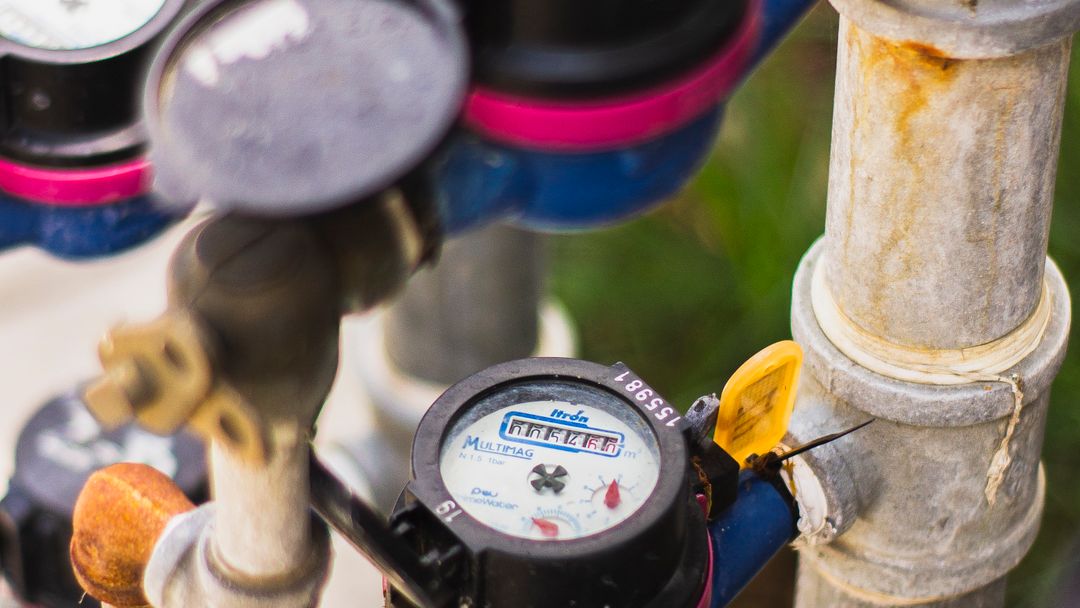
Find the low flow indicator. Most meters have a small dial, triangle or star that turns on very low flow, well before the main digits move. With everything in the house closed, that indicator should be completely still.
Do the overnight test. Read the meter last thing, use nothing overnight, read it again before anyone runs a tap. Any difference is water you lost while asleep, and it converts a suspicion into a number.
Then split the house from the yard. Close the main shutoff at the house and watch the meter again. Still moving means the loss is between the meter and the house, which is the buried private line. Stopped means it is inside.
Isolate the irrigation separately. On a property with sprinklers, closing that isolation valve and repeating the test is usually the fastest single step, because irrigation faults are the most common cause of a large jump.
Check the toilets before anything else indoors. Food colouring in the cistern, left fifteen minutes without flushing. Colour in the bowl means the flapper is passing, and a leaking toilet can account for the entire increase on its own.
Photograph each reading. A picture of the dial with a timestamp removes any argument about what it said and when, both with yourself the following week and with the utility later. It takes a second and it is the difference between a measurement and a recollection.
A short list accounts for nearly every genuine high bill we investigate.
Toilets, by a wide margin indoors. A fill valve or flapper that does not seal runs continuously and silently. It is the cheapest fault to fix and the largest indoor loss there is.
Irrigation, by a wide margin outdoors. A stuck zone valve, a broken head or a forgotten second programme waters enormously without anyone seeing it happen, because it runs at night.
The buried private line between meter and house. A leak there runs constantly and may never surface, particularly in sandy ground. It shows as the meter moving with the house valve closed.
Automatic top ups. A pool autofill, a livestock trough float or a humidifier that has stuck open all feed continuously while looking entirely normal.
A softener stuck in regeneration. A unit cycling repeatedly sends treated water straight to drain, usually in the small hours, which is exactly when nobody is watching.
Occasionally, nothing is wrong. A hot dry month with more irrigation, guests staying, filling a pool, or a billing period with more days in it all raise a bill legitimately. Comparing consumption rather than the amount is what tells you which.
Think about what changed just before the bill did. A new appliance, a repair, a freeze, work in the street or a sprinkler system switched on for the season all bracket the problem in time. The date the loss started is often the strongest clue to what caused it.
Once you know where the water went, the billing conversation is straightforward.
Meters usually under read as they age. Mechanical meters tend to slow down rather than speed up, so a sudden large jump is far more likely to be a real leak than a faulty meter. Accuracy testing is available and it is rarely the answer.
Ask for the consumption history. Your usage over previous periods, in gallons rather than dollars, is the comparison that shows whether this is a genuine anomaly or a rate or seasonal change.
Many suppliers have a leak adjustment policy. Where a leak has been found and repaired, some part of the excess may be adjusted, usually once, on evidence. That evidence is a plumber's invoice describing the repair.
Keep the paperwork and the dates. When you noticed it, the meter readings you took, the invoice and the repair date. An adjustment request with those attached is a different conversation from one without.
Everything after the meter is yours. The utility maintains the main and the meter. The private line to the house and everything inside it is the owner's, which is why the isolation test matters for responsibility as well as diagnosis.
Then confirm the fix. Repeat the overnight test after the repair. A bill is a lagging indicator, and the meter tells you the following morning whether the problem has actually gone.
Act before the next cycle closes. A loss left running while a dispute is discussed simply becomes a second high bill, and adjustment policies rarely cover the same leak twice. Fixing first and arguing afterwards is the cheaper order.
The phone is answered around the clock, holidays included. If you can, do the overnight reading and the house valve test before you call, because those two numbers tell us where to start. Otherwise tell us how much the bill rose and whether the property has irrigation or a pool.
Crosby and this part of Harris County are on our daily route, with overnight dispatch. We isolate and meter test before opening any ground, provide an invoice written so it supports a leak adjustment request, and confirm the repair with a second overnight test.
FAQ
Read the meter last thing at night, use no water, and read it again in the morning. Any difference is water lost while the house was asleep, and that single test turns a suspicion into a measured number.
Close the main shutoff at the house and watch the meter. If it still moves, the loss is between the meter and the house, on the buried private line. If it stops, the leak is indoors.
Indoors, a toilet that does not seal. Outdoors, and more often overall, irrigation. Both run silently and both can account for the entire increase on their own.
It is possible and it is unlikely. Mechanical meters generally slow down as they age rather than over read, so a sudden jump is far more likely to be a genuine leak. Accuracy testing is available if you want it ruled out.
Many have a leak adjustment policy, usually applied once and on evidence. A plumber's invoice describing the leak and the repair, with dates, is what supports the request.
Compare consumption in gallons across previous periods rather than the dollar amount. A hot month, guests, a pool fill or a longer billing period all raise a bill legitimately, and that comparison separates those from a fault.
You are. The utility maintains the main and the meter, and everything downstream of the meter, including the buried line across your property, is the owner's responsibility to repair.
Repeat the overnight meter test the night after the repair. The bill is a lagging indicator, and the meter tells you the next morning whether the loss has actually stopped.
Services
Meter testing and locating the loss.
About this serviceThe buried private line from the meter.
About this serviceThe largest indoor loss, and the cheapest fix.
About this serviceIrrigation valves and outdoor taps that run on.
About this serviceUnits stuck in regeneration overnight.
About this serviceOvernight dispatch in Harris County.
About this serviceTalk to someone now
Take an overnight meter reading, then repeat it with the house valve closed. Those two numbers tell us where to start before we open any ground.
Call about a high water bill