Gas Line Services
Testing, repair, sizing and new branches.
About this serviceGreater Houston
Deer Park houses are mostly all-gas: heater, furnace, range, dryer, and in a growing number of cases a standby generator and an outdoor kitchen added later. That makes fuel gas the system we are called out to here more than any other, and it is also the one where the boundary between what the utility handles and what a licensed plumber handles causes the most confusion.
24/7 dispatch · Deer Park · Harris County
Almost every confused gas call starts here, so it is worth being precise about it.
The meter and everything upstream of it belongs to the utility. The service line in the ground, the riser, the meter and the regulator on it are theirs, and they will come out to those at any hour. Nothing downstream of the meter outlet is.
Everything from the meter into the house is yours. The house piping, the risers through the slab or wall, the branches to each appliance, the shutoff valves and the connectors at the appliances are all homeowner property and homeowner responsibility. That is the part we work on.
On a smell-gas call the utility's job is to make it safe, not to repair it. If they find a leak on house piping they will shut the gas off at the meter, and in most cases lock or tag it, and leave. That is the correct outcome and it is not them being unhelpful. Restoring service then requires the house-side fault repaired and the line proved to hold.
Which is why the call sequence matters. If you smell gas, leave, then call the utility and the fire department from outside. Our part begins after the gas is off and everybody is safe, and we would far rather be the second call than the first.
There is a real difference between checking a joint and testing a system, and the distinction decides whether a gas line can be turned back on.
A soap solution at a fitting finds a leak. It does not prove there is not one. It tells you about the joint you can reach and nothing about the twenty feet inside a wall. It is a useful tool and it is not a test.
A pressure test is a gauge and a clock. The piping is isolated, brought up to test pressure with air, and watched on a gauge for a set period. If the needle holds, the system holds. If it falls, there is a leak, and the size of the fall over time says something about how big.
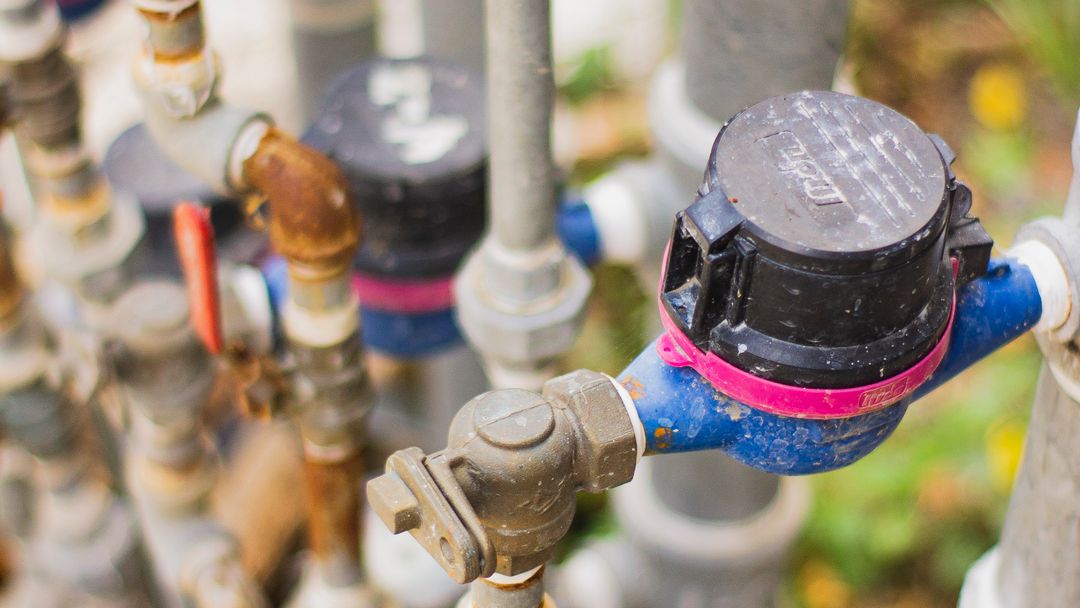
Then it gets isolated section by section. A house with a failing test is broken down at unions and valves so the failure can be attributed to one branch instead of the whole system. That is the part that takes the time, and skipping it is how people end up replacing piping that was fine.
A failed section is replaced, not tightened. Retightening a threaded joint that has been in service for thirty years frequently makes it worse, because the sealant on the threads has aged and the pipe may be corroded at the shoulder. The honest repair is cutting out and repiping the failed run.
Additions and reconnections get tested as a matter of course. Any new branch, any appliance moved, any line that has been open to atmosphere: tested before gas goes back in it. This is also what an inspection expects to see on permitted work.
Deer Park's houses run from the 1950s to new infill, and the failure points are fairly predictable by era.
Appliance connectors age out. The flexible connector between a rigid gas stub and a range, dryer or heater has a service life. Old uncoated brass connectors are the ones worth finding and replacing on sight. So are connectors that have been kinked, reused from a previous appliance, or run through a cabinet back where something rests on them.
Missing sediment traps. A drip leg ahead of an appliance catches debris and moisture before it reaches a gas valve. Plenty of older installs and plenty of hasty appliance swaps simply do not have one, and the cost of adding it is trivial compared with a fouled valve on a furnace.
Corrosion where black iron leaves concrete or masonry. The vulnerable point is the transition: at the slab, at a stucco or brick penetration, where a riser comes out of the ground for a grill or a pool heater. Gulf Coast humidity plus salt-bearing air works on that interface and nowhere else along the pipe. It is checked visually on every gas call.
CSST and bonding. The yellow corrugated tubing used widely since the 1990s needs to be electrically bonded to the grounding system to reduce the risk of damage from a nearby lightning strike, and this coast gets lightning. Bonding is frequently missing or incomplete on houses where CSST was added during a remodel rather than at build.
Valves that no longer close. An appliance shutoff seizes in place, or turns without actually stopping flow. You find out when you need it. Exercising and, where needed, replacing appliance valves is part of any gas visit worth paying for.
This is now the most common reason we do planned gas work in Deer Park, and it is where existing piping gets exposed as undersized.
Pipe size is a function of total connected load and distance. Every appliance on a system claims a share of the available pressure, and the further the pipe runs, the more it drops. A line that comfortably fed a heater, a range and a dryer can be genuinely inadequate once a standby generator and a 50,000 BTU grill are hung off it.
The symptom is one appliance misbehaving when another runs. A tankless heater erroring during a generator exercise cycle, a furnace dropping out when the range is fully on, a grill that will not reach temperature. People blame the newest appliance. The pipe is usually the cause.
The correct order is calculate, then pipe. Add up the load, measure the developed length, size the pipe to it, and where necessary run a dedicated line from the meter rather than teeing off the nearest convenient branch. Sometimes the utility also needs to look at meter capacity, and that is worth knowing before the concrete goes in for an outdoor kitchen.
Outdoor runs have their own rules. Depth and protection for buried pipe, a suitable material or sleeve, proper corrosion protection at every point the pipe enters or leaves the ground, an accessible shutoff at the appliance, and no unions buried where you cannot get at them.
Permit and inspect it. Gas work on a house in Deer Park is inspected work, and you want that paperwork. It matters when you sell, it matters to your insurer after any incident, and it is the only independent confirmation that the line was tested.
The phone is answered around the clock, holidays included. If you can smell gas, the right order is out of the house first, then the utility and the fire department from outside, then us. On the phone the questions we ask are whether the gas is currently off, whether it was the utility that shut it, and whether anything was added to the system recently.
Deer Park sits in a dense part of eastern Harris County that we cover daily, and after-hours dispatch runs every night. Where a line fails a test we will tell you which section failed and why, and quote the repair to the failed run rather than to the whole house.
FAQ
Because the fault is on house piping, which is not theirs. Their responsibility ends at the meter outlet. They made it safe, which is their job. Repairing and proving the house-side line is licensed plumbing work, and then the gas can go back on.
Leave the house, do not operate switches or garage doors on the way out, and call the utility and the fire department from outside. Do not spend time hunting for the source yourself. Our work starts once the supply is off and everyone is out.
The piping is isolated, pressurised with air and watched on a gauge for a set period. If it fails, the system is broken down section by section to find which branch is leaking. The isolating is the slow part, and it is what stops you replacing piping that was never faulty.
Rarely a good idea on old threaded pipe. Aged thread sealant and corrosion at the shoulder mean retightening often makes the leak worse. Cutting out and repiping the failed section is the repair that holds and the one an inspector expects.
That is CSST, used widely since the 1990s. It is a legitimate material, but it must be electrically bonded to the house grounding system to reduce lightning-related risk. On this coast that matters, and the bond is often missing where CSST was added during a remodel.
Usually it is in lockout after being starved of gas, and it needs resetting and checking rather than replacing. Every gas appliance in the house should be relit and verified individually after an outage, including pilots on older units.
Often not without changes. A generator is a large, sudden load, and the existing pipe was sized for the appliances in the original plan. It is a calculation based on total load and pipe length, and sometimes it means a dedicated run from the meter.
That is a classic sizing symptom. Two large appliances are competing and the pressure at the furthest one drops below what it needs. Nothing is faulty. The pipe is too small for the load now on it.
Yes, and you want one. It is inspected work, the inspection confirms the line was tested, and the paperwork matters at resale and to your insurer. It is also the cheapest part of the job.
It is a short capped leg of pipe ahead of an appliance that catches debris and moisture before they reach the gas valve. Many older installs and most rushed appliance swaps lack one. Adding it during other work costs very little and protects the appliance.
Services
Testing, repair, sizing and new branches.
About this serviceAfter a shutoff, at any hour.
About this serviceCombustion appliance replaced and tested.
About this serviceGas appliances in an attic, done properly.
About this serviceThe largest gas load most houses add.
About this serviceGas work for shops and light industrial.
About this serviceTalk to someone now
Tell us whether the utility shut it and whether anything was recently added to the system. We test, find the failed section, repair it and prove it holds so service can be restored.
Call and tell us what was shut off