Cast Iron Drain Replacement
Replacing pipe at the end of its life.
About this serviceGreater Houston
Richmond has genuinely old housing stock by Texas standards, and a great deal of it drains through cast iron. Cast iron is not a bad pipe. It is a pipe with a service life, and a lot of it here is at the end of that life, which produces a specific set of symptoms that get misread as blockages for years before anyone puts a camera down.
24/7 dispatch · Richmond · Fort Bend County
Cast iron fails from the inside, slowly, and in a pattern that is recognisable once you know it.
The inside scales up long before anything leaks. Corrosion builds a rough layer of rust and scale on the pipe wall, so a four inch line behaves like a three inch one. Nothing is technically blocked, but the capacity you paid for has gone.
Rough walls catch what smooth walls carry. Paper and solids that would pass a plastic line snag on scale, which is why a house starts needing clearing twice a year and then three times a year. The cabling works each time, which hides the real trend.
Then it channels. The bottom of the pipe corrodes through first, because that is where water and waste sit. The result is a line with its floor missing, which does not hold grade and will not stay clear whatever you do to it.
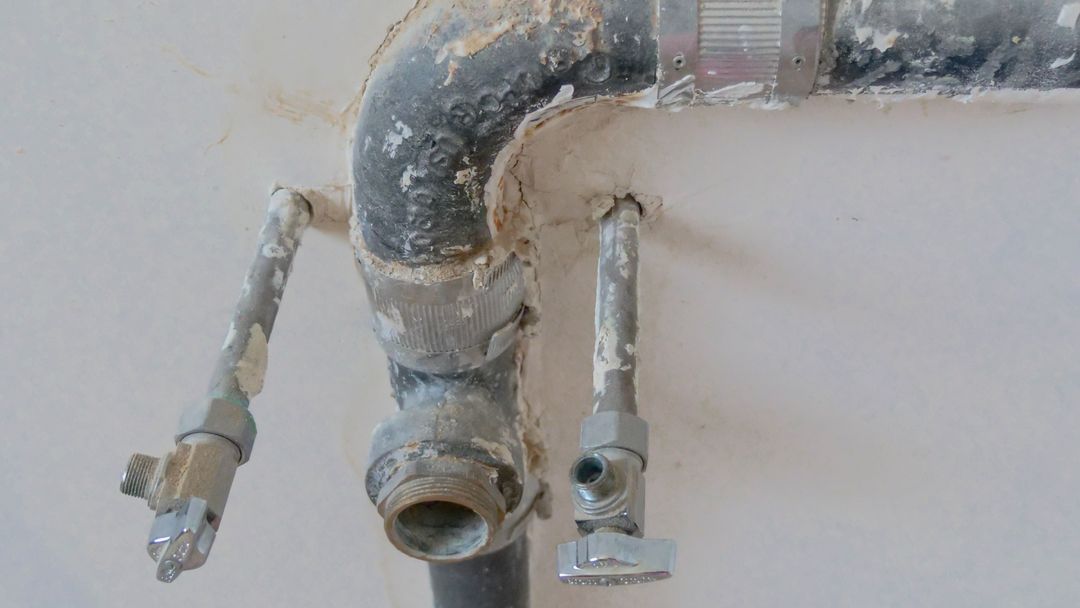
Joints and hubs are the other weak point. Older cast iron was joined with lead and oakum, and those hubs loosen and leak while the pipe either side looks sound. A repair at the joint is often all that is needed there.
Age alone is not the verdict. Plenty of cast iron in this area still has years in it, particularly above ground. What matters is condition where the line actually runs, and the only honest way to know that is to look.
Above ground and below ground age differently. The vertical stack in a wall and the horizontal run under the slab live in completely different conditions, so one can be sound while the other is finished. A survey that only looks at what is easy to reach is only telling you half the story.
A survey is the whole basis of the decision, so it is worth understanding what you are being shown.
Ask to see the footage, not a summary. Scale, channeling, a bellied section holding water, an offset joint and a root mass all look completely different on screen. A homeowner who has watched the run once understands the quote in a way no description achieves.
Jetting before the camera is often necessary. You cannot assess a pipe you cannot see through. Cleaning the line first, then surveying, is the correct order, and a quote given without that step is a guess.
Locating matters as much as looking. A defect is only actionable if you know where it is, how deep, and whether it sits under a slab, a driveway or open ground. That is what separates a modest repair from a major one.
A camera cannot see wall thickness. It shows the inside surface, not how much metal is left. Where a line looks marginal, the sensible reading is that the parts you cannot inspect are no better than the parts you can.
Keep the report. A recording, with distances noted, is the reference for every future decision on that house, and it is worth asking for as a file rather than a verbal account.
Once you know the condition, the choice is a value question rather than a technical mystery.
Lining suits a pipe that still has shape and fall. A liner cured inside the existing pipe gives a smooth new bore without opening the floor, and on a scaled but intact line it is frequently the better value. Where the pipe has channeled out or lost grade, a liner has nothing sound to sit in.
Replacement under a slab is disruptive and sometimes correct. Tunnelling from outside or breaking and re-pouring floor sections are both real options, with different costs and different amounts of disturbance to the house. Which is better depends on the route, the depth and what is above it.
Spot repairs are legitimate and should be honest about it. One failed hub in an otherwise sound run is a spot repair. The distinction that matters is whether the rest of the system is in comparable condition, because three spot repairs in two years was really a replacement all along.
Do the whole system at once where it makes sense. If the floor is coming up anyway, dealing with the branches and adding proper cleanouts while access exists costs far less than returning for each of them later.
Plan for living in the house. Work of this kind is staged: one bathroom at a time, water off for known windows, dust control between the work and the rest of the house. Agreeing that sequence in advance is what makes the job bearable.
The phone is answered around the clock, holidays included. It helps to know how old the house is, how often drains have needed clearing lately, and whether more than one fixture is affected. A house that needs clearing on a schedule is telling you something a single callout will not.
Richmond and this part of Fort Bend County are on our daily route, with overnight dispatch. We clean and camera before quoting a replacement, show you the footage rather than describing it, and will say plainly when a spot repair is the sensible end of the conversation.
FAQ
Decades, and plenty in this area is still serviceable. What ends its life is corrosion from the inside, so condition matters more than age. A camera survey on an older Richmond house tells you where yours actually stands.
No, it is a symptom. A line whose inside has scaled up catches solids that a smooth pipe would carry, so clearing works briefly and the interval keeps shortening. That pattern is worth surveying rather than repeating.
It means the bottom of the pipe has corroded away, because that is where waste and water sit. A line with its floor missing cannot hold grade or stay clear, and it is the finding that usually moves a job from repair to replacement.
If the pipe still has its shape and its fall, yes, and it avoids opening the floor. If it has channeled out or bellied, there is nothing sound for a liner to sit in, which is exactly what the survey is for.
Not always. Tunnelling from outside is often possible, and lining avoids it altogether on the right pipe. Where the floor does have to come up, it is staged room by room rather than all at once.
Because you cannot assess a pipe you cannot see through. Jetting first and surveying second is the correct order, and any quote given without that step is an estimate rather than a diagnosis.
Yes, and you should. Scale, a bellied section and a cracked hub look completely different on screen, and ten minutes watching the run makes the quote make sense. Ask for the recording as a file.
Not necessarily, but ask how the rest of the system looked on camera. One failed hub in sound pipe is a spot repair; a failed hub in a line that is scaled throughout is the first of several.
Nearby
Services
Replacing pipe at the end of its life.
About this serviceSurveying before any decision.
About this serviceCleaning scale so the line can be assessed.
About this serviceLining a pipe that still has its shape.
About this serviceRepeat clearing and what it is telling you.
About this serviceOvernight dispatch in Fort Bend County.
About this serviceTalk to someone now
Tell us how old the house is and how often the line has been cleared. We jet, camera and show you the footage before anyone talks about replacement.
Call about a slow or repeating drain problem