Tankless Descaling and Maintenance
The annual visit this water makes necessary.
About this serviceGreater Houston
Fulshear has been built almost entirely in the last fifteen years, and a large share of those houses left the builder with a tankless water heater on the garage or exterior wall instead of a tank in the attic. It is a better appliance in most ways. It is also the one piece of equipment in a new Fulshear house that needs deliberate annual attention, and the calls we take here are overwhelmingly about what happens when it does not get it.
24/7 dispatch · Fulshear · Fort Bend County
This is not a coincidence of taste. It is what production builders in west Fort Bend specified through the whole period Fulshear grew, and it changes what service looks like.
The appliance is on the wall, not in the attic. Garage walls and exterior walls are the normal locations here, which is genuinely better: no 50 gallons of stored water above a finished ceiling, and a leak at the unit lands on concrete or on the ground. Lewisville's attic-heater problems mostly do not exist in this housing stock.
It has no reserve. A tank holds hot water whether or not it is working well. A tankless unit makes hot water on demand, every time, which means any loss of performance is immediately visible at the tap. There is no buffer to hide behind, and that is why small faults present as dramatic symptoms.
It is a gas appliance with a computer in it. Ignition, flame sensing, a modulating burner, a flow sensor, a fan and a control board. When something is wrong it usually tells you in a two-digit code rather than simply going cold, and that code is the most useful thing you can give us on the phone.
It expects maintenance in a way a tank does not. A tank in this county silently fills with sediment for a decade and still delivers hot water. A tankless unit pushes all the water it heats through a narrow heat exchanger, so the same water chemistry that a tank tolerates for years will change how a tankless unit behaves within two or three.
Nearly every tankless call we take in Fulshear traces back to water chemistry and a descaling interval that quietly slipped.
The heat exchanger is the narrowest hot path in the house. Hard water deposits on the hottest surface it touches, and in a tankless unit that surface is a set of small passages carrying the entire hot water demand of the house. Hardness that merely coats a tank element will measurably restrict a heat exchanger.
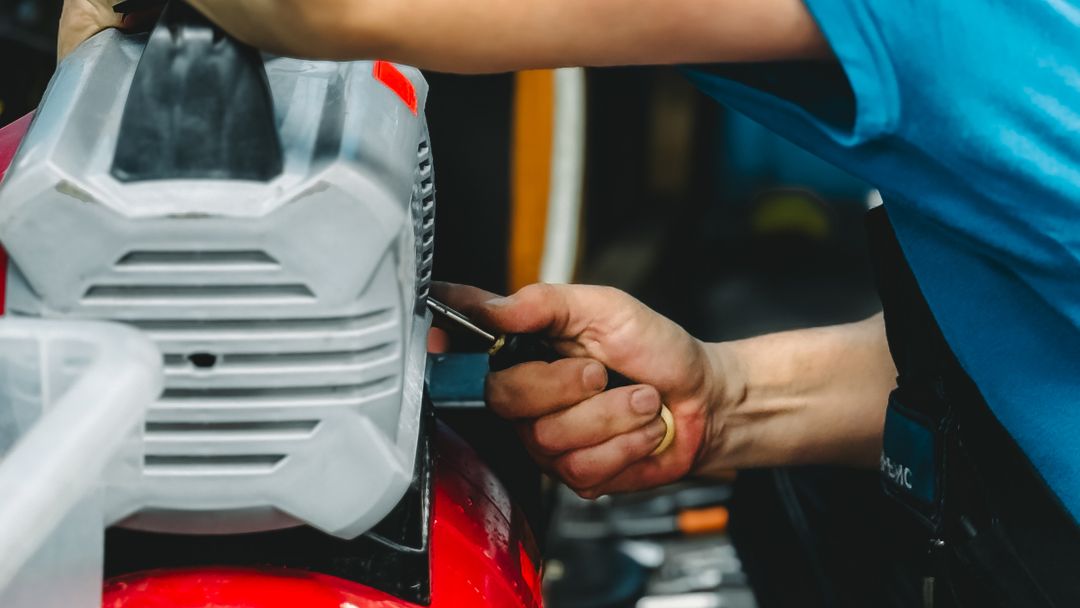
The symptoms come in a recognisable order. First the temperature wanders slightly during a shower. Then the unit needs more flow than it used to before it fires, so a hand basin runs lukewarm. Then it starts throwing codes under load. Then it stops. People generally call at stage three, when stage one was the appointment that would have cost the least.
Descaling is a circulation, not a chemical flush of the house. A pump moves a descaling solution through the exchanger via the isolation valves for an hour or so, then it is rinsed. If your unit was installed with proper service valves it is straightforward. If it was installed without them, they get added, and that is worth doing once rather than avoiding forever.
Annually is the honest interval on this water. Manufacturer literature will say annually and sometimes offers a longer interval on soft water. Fulshear is not soft water. Where a house has a correctly sized and actually working softener ahead of the unit, the exchanger stays clean far longer, and that is the single best thing you can do for the appliance.
Two of the most common complaints in this ZIP are not faults at all, and knowing which is which saves a call.
The cold slug between draws is normal behaviour. Turn the hot tap off and back on shortly afterwards and you get a short run of cool water while the unit re-fires and the pipe volume between it and the tap clears. It is a characteristic of the appliance, not a failure, and the fix is a recirculation strategy rather than a repair.
Ignition and flame-loss codes point at gas or air, not usually at the burner. Insufficient gas pressure at the unit while another appliance is running, a vent obstruction, a blocked intake, or a condensate line that has filled and backed up. On a house where a pool heater, a generator or a second range was added after the fact, gas supply is the first suspect.
Flow and temperature codes point at scale and sensors. A descale resolves a good proportion of them. Where it does not, the flow sensor or a thermistor is reading wrongly and gets replaced, which is a part rather than an appliance.
Condensate matters on a condensing unit. These produce acidic condensate, which needs a route to a suitable drain and in many installs a neutraliser cartridge that is a consumable. A neglected condensate path causes shutdowns and, over years, damage to whatever it has been draining onto.
A hard-locked unit is not always a dead unit. Repeated lockouts on the same code are data. We would rather read the fault history and correct the cause than replace a unit that is eight years into a twenty-year service life.
The install details are where new-house tankless units go wrong, and they surface years later when something else changes.
A tankless unit is a large gas load. It can call for more gas than every other appliance in the house put together, and it calls for all of it instantly. Where the original gas pipe was sized for exactly the appliances in the plan, adding a standby generator, an outdoor kitchen or a pool heater later can leave the heater short of pressure at the worst moment. The symptom is a heater that fails only when something else runs.
Vent terminations have clearances for a reason. Too close to a window, a soffit, an intake or an inside corner and the unit can draw its own exhaust, which produces intermittent faults that look electronic. On a tightly spaced Fulshear lot this is worth actually measuring rather than assuming.
Outdoor models are not freeze-proof, they are freeze-protected. Most have internal heaters that work while they have power. Lose power in a hard freeze with the unit full of water and the exchanger is at risk. Knowing where the unit's isolation valves and drains are before February is the cheap version of this lesson.
Recirculation retrofits need thought, not just a pump. Adding a crossover valve or a dedicated return to a tankless system can work well, and done carelessly it runs the burner constantly and accelerates scaling. On a large single-storey plan with long branch runs it is often the right answer, with the control set to demand or a schedule rather than continuous.
Warranty and registration are worth five minutes. Exchanger warranties on these units are long, and they generally assume documented maintenance. If you have owned the house since it was built and never had the unit serviced, a warranty claim is a harder conversation than it needs to be.
The phone is answered around the clock, holidays included. On a tankless call the first question is what the display shows, and the second is whether the fault happens only when another appliance runs, because those two answers often separate a gas supply problem from a scaled exchanger before anyone arrives.
Fulshear sits at the western edge of Fort Bend County, and we dispatch across it daily, with after-hours cover every night. If your unit needs a descale rather than replacement we will say so, and if it genuinely is at end of life we will tell you what it would cost to go back to a tank as well, so you are choosing rather than being told.
FAQ
Annually on this water. Manufacturer literature allows longer intervals on soft supplies, and Fort Bend water is not that. Where a house has a working, correctly sized softener ahead of the unit, the exchanger stays clean considerably longer and the interval can stretch.
Usually not. Stopping and restarting a draw leaves a slug of cooled water in the pipe while the unit re-fires. It is characteristic of the appliance rather than a fault. If it happens continuously rather than after a pause, that is worth looking at.
That is a gas supply symptom. A tankless unit demands a large volume of gas instantly, and if the pipe was sized for the original appliance list, a later addition can leave it short of pressure. We measure at the unit under load rather than guessing.
A great deal. Ignition and flame-loss codes point toward gas, venting or condensate. Flow and temperature codes point toward scale or a sensor. Reading the stored fault history is how a repeat fault gets diagnosed instead of reset.
It can, but it becomes a longer job. Fitting proper isolation and service valves once turns every future descale into a routine visit. On a unit you intend to keep, it pays for itself quickly.
It is the single most effective thing you can do for a tankless unit here, and it benefits fixtures and the dishwasher at the same time. Sizing has to be against a measured hardness figure rather than a default, or it will regenerate badly and underperform.
Keep power to it, because the built-in freeze protection is electric. If power is going to be off for an extended period in freezing weather, the unit needs isolating and draining. Find its valves before the forecast, not during it.
Yes, either with a dedicated return or a crossover valve at a far fixture. It should run on demand or a schedule rather than continuously, because constant recirculation means constant firing, and that accelerates scaling on hard water.
Usually not. A first descale on a neglected unit often restores most of its performance. Occasionally the exchanger is too far gone, and we will tell you that honestly rather than charge for a descale that will not hold.
Sometimes it is the right answer, particularly where the gas supply cannot economically be upsized or where nobody is going to maintain a tankless unit. We will price both so you can compare, rather than assuming the newer technology is automatically what you want.
Nearby
Services
The annual visit this water makes necessary.
About this serviceReplacement, or a first install done correctly.
About this serviceSensors, boards, ignition and flame faults.
About this serviceSizing and pressure when load was added later.
About this serviceProtecting the exchanger at the source.
About this serviceWhen going back to a tank is the better answer.
About this serviceTalk to someone now
Tell us what the display says and whether it happens while something else is running. That usually narrows it to gas or scale before we arrive.
Call and describe what the display says