Water Pressure Regulator Service
Testing, adjusting and replacement.
About this serviceGreater Houston
Pressure is the quietest cause of plumbing failure in Tomball. Too little and the house feels weak; too much and every washer, cartridge, hose and appliance valve in the building is being worked harder than it was designed for. Both are measurable in about ten minutes, and the measurement is what turns a guess into a repair.
24/7 dispatch · Tomball · Harris County
Pressure complaints get treated as a mystery when they are one of the few things in plumbing with a direct numerical answer.
Static pressure is taken with nothing running. A gauge on an outside hose bib with every tap closed gives the number the house actually sits at. Most residential plumbing is intended for roughly forty to eighty pounds per square inch, and anything above that is wearing the house out.
Then watch what happens when water moves. A reading that looks healthy at rest but collapses when a tap opens points to a flow restriction, an undersized or partly blocked supply line, rather than a pressure problem. The two symptoms feel identical from the shower.
Take a reading at more than one time of day. Street pressure varies, and it is often highest late at night when demand across the system drops. A house that tests at seventy five in the afternoon can be over ninety at two in the morning, which is when the failures happen.
Compare upstairs against the hose bib. Height costs pressure, roughly half a pound per foot of rise, so a two storey house is always weaker at the top. Knowing that is normal saves chasing a fault that does not exist.
A gauge with a peak needle tells you more than a plain one. The ordinary dial shows what is happening while you watch, which is rarely when the trouble occurs. A gauge that records the highest pressure reached can sit on the hose bib overnight and show you the spike that has been quietly destroying washers for a year.
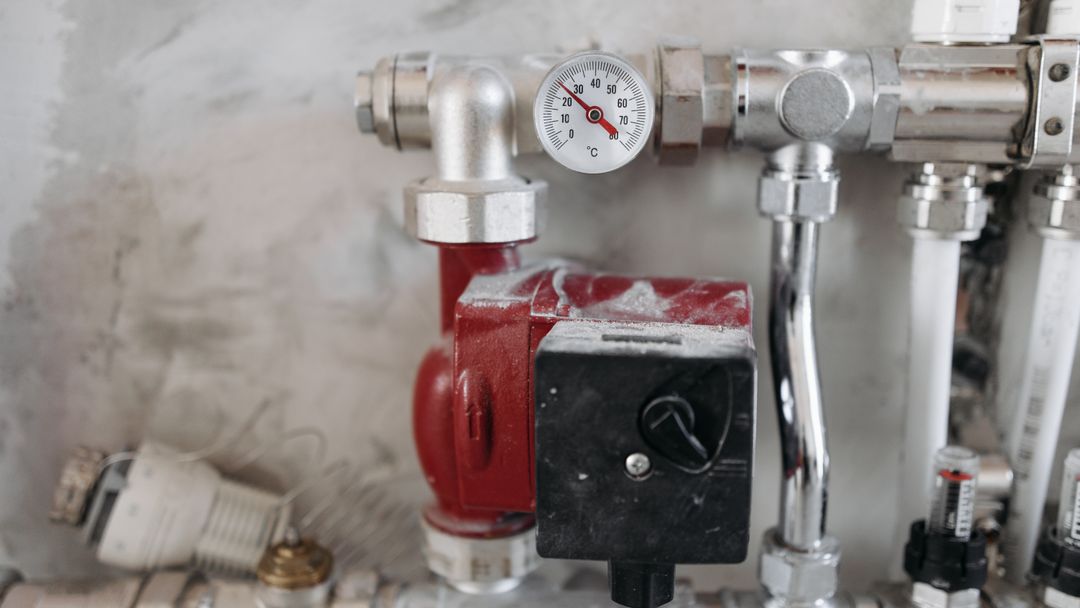
If the house has a pressure reducing valve, it is a wearing part with a service life, usually fitted near where the supply enters the property.
They fail slowly and in both directions. A tired regulator either creeps upward, letting street pressure through over weeks, or closes down and starves the house. Gradual change is why owners rarely notice until a fixture starts failing.
High pressure shows up as small failures everywhere. Dripping taps soon after a cartridge change, toilet fill valves that will not seal, hose bibs weeping, a washing machine hose that lets go, repeated appliance valve trouble. When several of those arrive in one year, measure the pressure before replacing anything else.
Adjustment is not always the answer. A regulator with a worn seat can be adjusted and will drift back within weeks. Replacement is a modest job and generally the honest recommendation once one has started moving.
Fit a serviceable arrangement. A regulator with isolation and a gauge point either side makes the next check and the next replacement quick. That detail is worth asking for while the pipe is open.
A regulator also protects what you added later. Refrigerator lines, filter housings, a tankless unit and a washing machine valve are all sitting behind the same number, and several of them are less tolerant than the plumbing they were connected to. Setting pressure correctly is cheaper than discovering which of those appliances has the lowest tolerance.
Once a house has a regulator, the plumbing becomes a closed system, and heated water has nowhere to expand to.
Heated water pushes pressure up sharply. Water expands as the heater fires, and in a closed system that shows as a spike well above the set pressure, then a fall as water is used. It is invisible without a gauge that records the peak.
The T&P valve is the symptom, not the fault. A temperature and pressure relief valve that weeps after the heater runs is usually doing its job against expansion pressure. Replacing it repeatedly without addressing the cause is the most common wasted repair we see.
An expansion tank is the normal remedy, and it needs charging. The tank has an air charge set to match house pressure. Set wrong, or left until the bladder fails, it does nothing, and a tank installed years ago and never checked is often flooded and useless.
Water hammer and expansion noise are different things. A bang when a valve shuts quickly, or ticking as a heated pipe moves against a bracket, are separate matters from pressure and get addressed on their own.
Check the tank with the pressure off the system. An expansion tank is tested by isolating it and checking the air charge on the valve at the top, then comparing that against the house pressure. Tapping the side to hear whether it sounds full is a rough guide at best, and a tank that has been in service for several years unchecked is more often failed than not.
The phone is answered around the clock, holidays included. It helps to know whether the problem is weak flow, excessive pressure, or a relief valve dripping, and whether the house has a regulator near the supply entry. If you own a gauge, a reading late at night is genuinely useful.
Tomball and northwest Harris County are on our daily route, with overnight dispatch. We measure static pressure and flow before quoting, check the expansion arrangement whenever a relief valve is weeping, and we would rather replace one regulator than a series of cartridges.
FAQ
Residential plumbing is generally intended for roughly forty to eighty pounds per square inch. A gauge on an outside hose bib with everything closed gives your number, and it is worth taking a second reading late at night when street pressure is usually highest.
That is usually the temperature and pressure relief valve discharging against thermal expansion, not a failing tank. In a closed system the remedy is a correctly charged expansion tank, and replacing the valve alone will not stop it.
Repeated small failures across the house are a classic sign of pressure that is too high. Measure it before replacing more cartridges, because at ninety pounds new parts fail on the same schedule as the old ones.
That pattern points to restricted flow rather than low pressure, often an undersized or partly blocked supply line. Static pressure and flow are measured separately because they have different fixes.
Usually near where the supply enters the property, often close to the main shutoff. Not every house has one, and whether yours does changes both the diagnosis and whether an expansion tank is needed.
Sometimes, briefly. Once the seat is worn, an adjusted valve tends to drift back within weeks, so replacement is generally the honest recommendation rather than a repeat visit.
If the house is on a closed system behind a regulator or a check valve, yes. If one is already fitted, it needs its air charge checked, because a tank with a failed bladder is doing nothing at all.
Partly. Every foot of rise costs about half a pound, so upper floors are always a little weaker. If the drop is much larger than that, we look at the supply line and the fixture rather than the street.
Services
Testing, adjusting and replacement.
About this serviceFinding what high pressure has broken.
About this serviceRelief valves and expansion tanks.
About this serviceSupply restrictions and flow problems.
About this serviceCartridges that keep failing.
About this serviceOvernight dispatch in northwest Harris County.
About this serviceTalk to someone now
Tell us which of the three it is and whether the house has a regulator. We measure static pressure and flow before we quote anything.
Call about water pressure