Water Heater Repair
Elements, valves, thermostats and anodes.
About this serviceGreater San Antonio
A water heater is the appliance most likely to end its life before it should, and almost always for reasons that were visible years earlier. In Floresville the water is hard, the tanks are often in a garage or an outbuilding, and the maintenance that would double their working life takes about twenty minutes a year that almost nobody spends.
24/7 dispatch · Floresville · Wilson County
Tanks rarely fail from age alone. They fail from two things that can be measured and managed.
Sediment builds on the bottom and insulates the burner. Hard water drops minerals as it heats, and that layer sits between the flame and the water. The burner runs longer to do the same job, the steel above it gets hotter than it should, and the tank ages from the inside.
Rumbling and popping is sediment, not the tank boiling. The noise is water flashing to steam under the deposit. It is the clearest audible warning a heater gives, and it usually arrives years before a leak.
The anode rod is designed to be sacrificed. It corrodes so the tank lining does not, and in hard or aggressive water it goes faster. Once it is consumed, the tank itself starts corroding, and that is not reversible.
Temperature set too high accelerates everything. Higher stored temperature means faster mineral deposition and more scale, along with a genuine scalding risk. Around 120 degrees is the usual sensible setting.
A tank on a hard floor with no pan is a flooring bill waiting. Tanks fail by leaking, not by exploding, and where that water goes is decided in advance by whether there is a pan with a drain.
Where the tank lives changes its life too. A heater in an unconditioned garage or an outbuilding works harder in winter and sits in bigger temperature swings than one in a closet, and it is also the one nobody looks at from one year to the next. Location is worth factoring into how often it gets checked.
None of this is difficult, and all of it is routinely skipped.
Drain some water out annually. Flushing a few gallons from the drain valve removes loose sediment before it hardens. On a tank that has never been flushed, expect it to be slow and expect the water to be alarming.
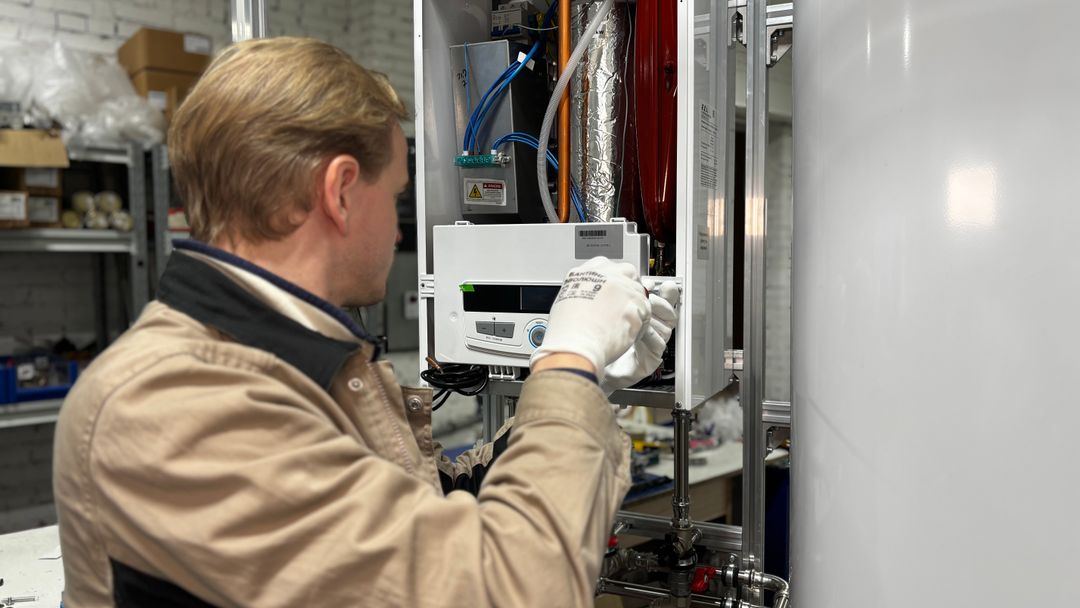
Have the anode inspected in the first few years. Checking it at around three years tells you the rate it is going in your water, which sets the interval for the rest of the tank's life. Replacing a rod is far cheaper than replacing a tank.
Test the relief valve, carefully. The temperature and pressure relief valve is a safety device that can seize if never operated. It should be checked, and a valve that then weeps needs looking at rather than ignoring.
Look at the flue and the burner on a gas unit. Rust flakes, soot, or a pilot that keeps going out are all combustion issues, and they matter more than a slightly slower recovery time.
Keep the area clear and the pan drained. Stored boxes against a heater block combustion air, and a pan full of debris is not a pan. Both take a minute.
Write the install date on the tank. Serial numbers encode it, and nobody remembers how to read them at the point it matters. A marker pen date on the jacket turns the repair or replace conversation into a five second one years later.
When something does fail, the decision is usually straightforward if you know which part has gone.
Leaking from the tank body means replacement. Water from the shell is corrosion through the steel and it cannot be repaired. Water from a fitting, a valve or a connection is a repair, and telling those apart is the first thing to establish.
Elements, thermostats and gas valves are repairs. On a tank with reasonable life left, replacing a failed component is sensible. On a tank already past its expected years with a consumed anode, the same repair is money spent on a short extension.
Size for the household's peak, not the average. Recovery rate matters as much as capacity, which is why two showers and a dishwasher at once is the number to design for rather than daily totals.
Tankless suits some houses and not others. It needs adequate gas capacity, proper venting and descaling maintenance in hard water. Where those line up it is excellent; where they do not it is an expensive disappointment.
Treating the water protects the new one. Installing a new tank into the same hard water that killed the last one starts the same clock. If a softener is being considered, this is the moment.
Get the installation details right. A pan with a drain, the correct relief discharge, an expansion tank where the system is closed, and accessible shutoffs. Those four things separate a good installation from a cheap one.
Plan the replacement rather than waiting for it. A tank replaced on a weekday, with the route out of the house considered and the new unit chosen deliberately, costs less and goes better than the same job at midnight with water on the floor. Once a heater is past its expected years, choosing the timing is the last saving available.
The phone is answered around the clock, holidays included. Tell us whether there is no hot water, not enough, or water on the floor, and whether the unit is gas or electric. If water is coming from the tank itself, close the cold inlet valve and the gas or breaker before we arrive.
Floresville and Wilson County are on our daily route, with overnight dispatch. We establish whether a leak is the tank or a fitting before quoting, check the anode on any tank worth keeping, and fit pans and drains as standard rather than as an extra.
FAQ
It is a warning rather than an emergency. The noise is water flashing to steam under a layer of sediment, which means the burner is working through a deposit and the tank is ageing from the inside. It usually precedes failure by years.
Less than the brochure suggests, because the water is hard. Sediment and a consumed anode rod are what shorten it, and both are manageable if they are checked rather than assumed.
It is a sacrificial rod that corrodes so the tank lining does not. In hard or aggressive water it is consumed faster, and once it has gone the tank itself starts to corrode, which cannot be undone.
Draining a few gallons a year from the drain valve is reasonable and worth doing. On a tank that has never been flushed expect it to run slowly and look bad, and if it will not drain at all, that is worth a call.
It depends where from. Water from a fitting or a valve is usually a repair. Water from the tank body is corrosion through the steel, and that means replacement.
Around 120 degrees suits most households. Higher settings speed up scale formation and carry a real scalding risk, particularly where children or older adults are in the house.
Only if the gas capacity, venting and descaling maintenance all line up. In hard water a tankless unit needs regular descaling, and skipping that is what turns a good decision into an expensive one.
It should have one, with a drain piped somewhere visible. Tanks fail by leaking, so where that water goes is decided in advance by whether the pan and drain exist.
Nearby
Services
Elements, valves, thermostats and anodes.
About this serviceReplacement, pans, drains and expansion.
About this serviceWhere gas and venting allow it.
About this serviceHard water maintenance on tankless units.
About this serviceProtecting a new tank from the same water.
About this serviceOvernight dispatch in Wilson County.
About this serviceTalk to someone now
If water is coming from the tank, close the cold inlet and kill the gas or breaker. Then tell us gas or electric and what it is doing.
Call about a water heater