Pier and Beam Plumbing Repair
Supply and drain work under a raised floor.
About this serviceGulf Coast
A lot of Dickinson is higher off the ground than it used to be. Houses along the bayou and through the older neighbourhoods have been lifted, some of them twice, and lifting a house does something to its plumbing that nobody explains at the time: it takes pipe that spent fifty years buried and warm and hangs it in the open air under your floor.
24/7 dispatch · Dickinson · Galveston County
An elevation project is engineering, foundation and framing work. The plumbing is usually the last trade involved and the first to cause trouble afterwards.
Buried pipe becomes exposed pipe. Supply lines that were protected by soil are now in open air below the floor, subject to freezing, to sunlight, and to anything that can hit them. The pipe did not change. Its environment did, completely.
The drop to the lateral is the new weak point. The sewer connection still has to meet the original lateral at its original depth, so a raised house has a vertical section and two changes of direction that did not exist before. Poorly supported, that section sags, cracks at a fitting, or becomes the place a blockage always forms.
Support has to be deliberate, not incidental. Pipe hung under an elevated floor needs hangers at proper intervals with the correct fall maintained across the run. Strapping a drain line up wherever a joist happened to be is what produces a belly ten feet long that holds water permanently.
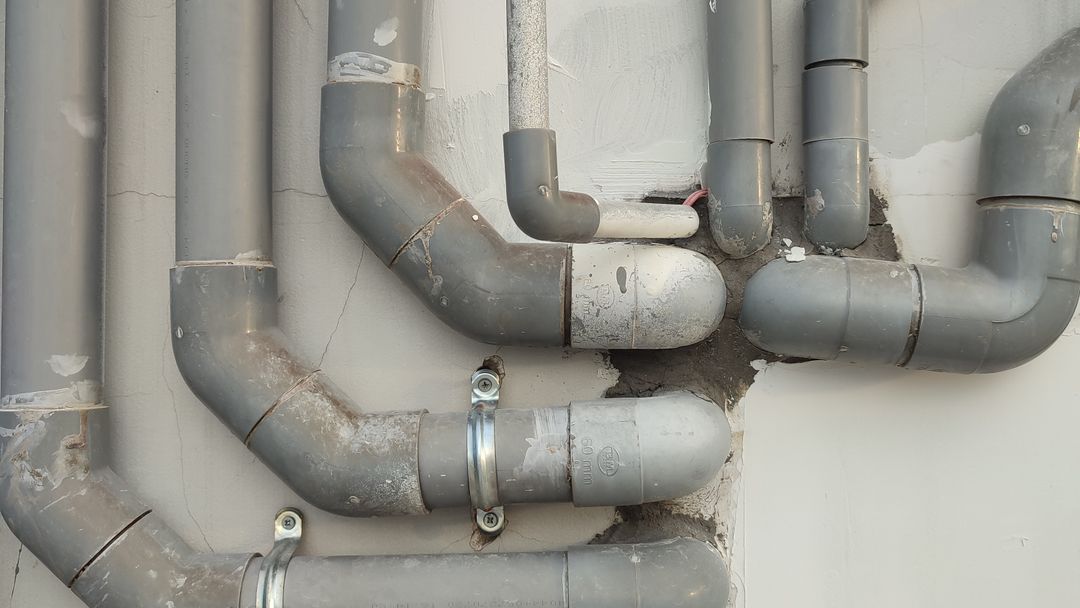
PVC in sunlight is on a clock. White PVC exposed to direct sun becomes chalky and brittle over years. Under a raised house on an open lot, the south and west sides get real exposure, and painted or sleeved pipe lasts considerably longer than bare pipe.
Dickinson does not freeze often, and that is exactly why an elevated house here is vulnerable when it does.
Everything under the floor is now at outdoor temperature. Insulation on the pipe alone slows a freeze, it does not prevent one over a long night. Where the underside is enclosed by skirting the risk falls considerably; where it is fully open, self-regulating heat cable under the insulation on the exposed runs is the measure that actually works.
Enclosing underneath is a plumbing decision as well as an appearance one. Skirting or a breakaway enclosure keeps wind off the pipe and makes the space usable. It also has to stay vented, and anything gas-fired below the floor changes the rules entirely, so that combination needs looking at rather than assuming.
A heater relocated upstairs puts water above your ceilings. Elevation projects often move the water heater from a ground-level space to a closet or an attic on the living level. That is sensible for flood risk and it creates a new obligation: a pan, a drain line from it that terminates where you will see it, and a shutoff you can reach without a ladder.
Exterior shutoffs need to be findable at night. On a raised house the main valve and the hose bibs end up in new places, sometimes high on a pier or behind a stair. Knowing where they are, and having them labelled, is worth more than any device you can buy.
Most of the houses we see were raised some years ago by someone else. These are the four things worth verifying.
Crawl under and look at fall, or have someone do it. Drain lines should run continuously downhill to the point they turn down toward the lateral. Standing water in a clear section, a visible dip, or a hanger that has slipped are all findable by eye with a torch.
Camera the vertical drop and the connection. The section from under the house down to the original lateral is where offsets and cracked fittings hide. Recorded footage settles it, and it is the single most useful inspection on a raised house.
Look for flexible pipe used as a shortcut. Corrugated or flexible fittings pressed into service to bridge an awkward gap during a lift are common and they are a permanent problem. They catch solids and they cannot be cleaned properly.
Check that abandoned lines were actually abandoned. After a lift there are often old stubs, capped risers and a disused hose bib feed left in place. Every one is a potential leak point with no purpose, and cutting them back to a proper cap is quick work.
The phone is answered around the clock, holidays included. On a raised house, tell us roughly how high it sits and whether the underside is open or skirted, because that decides what we bring.
Dickinson sits in the part of Galveston County we cover every day, with dispatch overnight through League City, Texas City and the bayou communities. On an elevated house we will inspect the whole exposed run rather than only the fitting that is leaking, because the cause is almost always support, exposure or the drop to the lateral.
FAQ
Fall on the drain lines, the hangers holding them, the vertical section down to the original lateral, and any abandoned stubs left behind. A torch and a look, or a camera on the drop, will find nearly everything that matters.
Because they used to be buried in soil at a stable temperature and now they are in open air at whatever the night reaches. Insulation slows that, it does not stop it. Self-regulating heat cable under insulation on the exposed runs is what reliably works here.
Yes. The lateral stays at its original depth, so there is now a vertical drop and two changes of direction between the house and it. That section is where offsets, cracked fittings and repeat blockages concentrate, and it is worth a camera survey.
It helps the plumbing a great deal by keeping wind off the pipe, and it has to stay properly vented. If anything gas-fired sits below the floor, enclosing the space changes what is permitted, so that combination needs to be looked at rather than assumed.
That combination usually means a sagging section holding water or a vent that was not reconnected properly during the lift. Both are visible from underneath, and both are cheaper to correct than they sound.
A pan under it, a drain line from that pan that terminates somewhere you will actually notice, and a shutoff you can reach without a ladder. Moving the heater up is the right call for flood risk, and those three things finish the job properly.
White PVC in direct sun goes chalky and brittle over years, and on an open lot the south and west runs get genuine exposure. Painting or sleeving exposed PVC is cheap and it measurably extends its life.
Generally yes. Flexible sections get used to bridge awkward gaps during a lift and they stay forever. They catch solids, they cannot be cleaned properly, and replacing them with correctly cut rigid pipe at the right fall is straightforward work.
Nearby
Services
Supply and drain work under a raised floor.
About this serviceRecorded survey of the drop to the lateral.
About this serviceHeat cable and insulation on exposed runs.
About this serviceCorrecting sag and offsets after a lift.
About this serviceHeaters relocated to the living level.
About this serviceOvernight dispatch across Galveston County.
About this serviceTalk to someone now
We inspect the whole exposed run: fall, hangers, UV damage, freeze protection and the drop to the lateral. One visit tells you what the lift left behind.
Call about plumbing under a raised house