Water Heater Installation
Collectors, storage tanks and backup heaters.
About this serviceCentral Texas
Solar water heating works genuinely well in this part of Texas, and it fails badly when it is installed as though the sun were the only variable. A solar system is a plumbing installation with a heat source on the roof, a storage tank, a control strategy and a freeze problem, and the systems that last decades are the ones where all four were thought about.
24/7 dispatch · Giddings · Lee County
Almost every residential solar water system is one of two arrangements, and the difference decides the freeze risk.
Direct systems heat your actual water. Potable water circulates up to the collector and back to the tank. It is simple and efficient, and the water in the collector is the water you drink, which means a freeze is a burst in your potable system.
Indirect systems use a heat transfer fluid. A separate loop of antifreeze solution runs through the collector and gives up its heat to your water through an exchanger. It costs more and it tolerates cold far better.
Passive systems have no pump. Thermosiphon arrangements move water by convection, with the tank above the collector. Fewer parts to fail, and a significant weight on a roof.
Active systems circulate with a pump and a controller. A sensor compares collector and tank temperature and runs the pump when there is heat to collect. More controllable and more to go wrong.
The tank is part of the system. Solar storage is usually larger than a conventional tank because you are banking heat when it is available rather than making it on demand.
Ask what the roof can carry. A passive thermosiphon system puts a full tank of water above the collector, which is a serious load in a position the roof was not designed around. That is a structural question to settle before the plumbing is designed, not after.
These are the two things that most often turn a good installation into a bad experience.
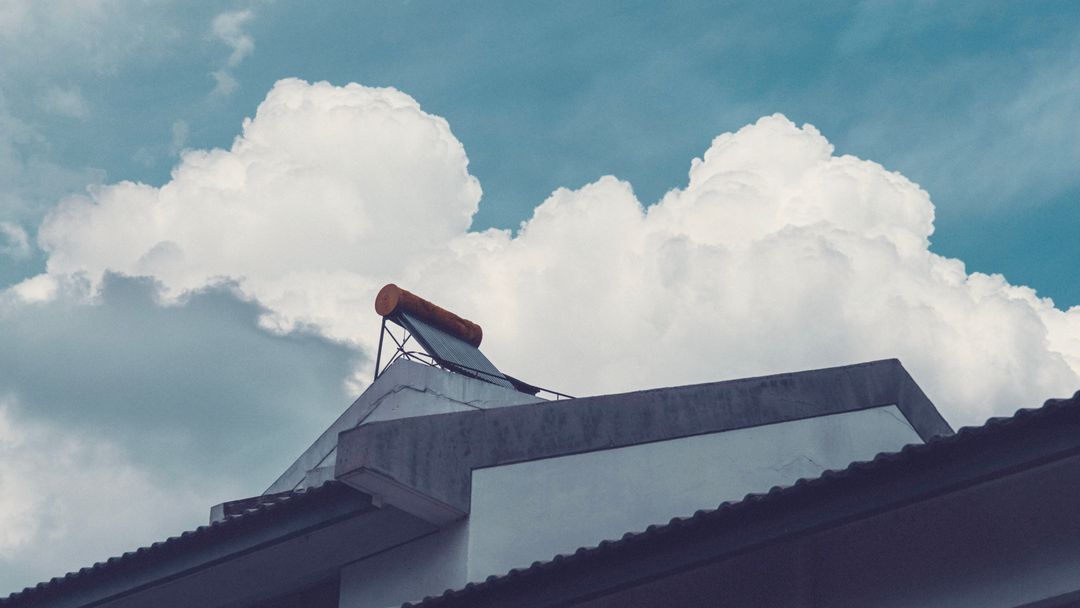
Texas does freeze, and the roof freezes first. A collector and its exposed pipework sit in the coldest, most exposed position on the property. Assuming a mild climate is how direct systems burst here.
Know which freeze strategy yours uses. Antifreeze in an indirect loop, automatic drainback, or a recirculation freeze cycle that runs warm water through the collector. Each has a failure mode, and a recirculation strategy fails when the power does.
Insulate and protect everything exposed. Pipe insulation on a roof degrades in ultraviolet light, and insulation that has crumbled is not insulation. It is the most common neglected item on an older system.
A backup heat source is not optional. Cloudy weeks happen, and a household needs hot water regardless. Solar supplements a conventional or tankless heater rather than replacing it, and the changeover has to work automatically.
Tempering protects against the opposite problem. On a strong summer day a solar tank can reach genuinely scalding temperatures, so a mixing valve on the outlet is a safety requirement rather than a refinement.
Have a manual override you understand. Knowing how to isolate and drain the collector loop, and being able to run the house on the backup heater alone, turns a hard freeze warning into a twenty minute task. Systems whose owners do not know how to do that are the ones that burst.
These systems are long lived and they are not fit and forget.
Heat transfer fluid degrades. Antifreeze in an indirect loop breaks down over years, particularly after periods of stagnation, and it needs testing and replacing. Fluid that has gone acidic attacks the system it was protecting.
Check the pump, the controller and the sensors. A failed sensor makes a system that looks fine do nothing at all, and the first sign is usually a higher bill rather than cold water, because the backup quietly takes over.
Watch the tank and the exchanger for scale. Hard water plus high temperature is the fastest scaling combination there is, so treatment and flushing matter more here than on an ordinary heater.
Roof penetrations are part of the installation. Mountings and pipe entries have to be flashed properly, and a solar installation that leaks water into the attic is a roofing failure caused by plumbing work.
Decide honestly about payback. Water heating is a substantial share of household energy, so the saving is real, and it depends on your use, your fuel and the installed cost. It pays best in a house that uses a lot of hot water.
Inherited systems deserve an assessment. Where a property came with a solar system of unknown age, establishing whether it works, and whether it is safely freeze protected, is worth doing before the first cold snap.
Keep the collector clear and think about shade. Dust, leaf litter and a tree that has grown since installation all reduce output quietly, and nobody notices because the backup heater covers the shortfall. A look at the roof once a year is part of owning one of these.
The phone is answered around the clock, holidays included. Tell us whether the system is new, inherited or being considered, whether you know if it is a direct or indirect arrangement, and what the backup heater is. Those answers shape everything else.
Giddings and Lee County are on our daily route, with overnight dispatch. We check the freeze strategy before winter rather than after, insist on a working backup and a tempering valve, and will tell you plainly when an inherited system is not worth recommissioning.
FAQ
Yes, and well. Water heating is a large share of household energy use, so the saving is real. The variable that decides success is not sunshine, it is whether the freeze protection and the backup were done properly.
A direct system circulates your potable water up to the collector. An indirect one uses a separate antifreeze loop and a heat exchanger. The indirect arrangement costs more and handles cold far better.
Certainly. The collector and its pipework sit in the most exposed position on the property, and on a direct system a freeze is a burst in your potable plumbing. Knowing your freeze strategy matters.
Yes. Cloudy weeks happen and the household still needs hot water, so solar supplements a conventional or tankless unit rather than replacing it. The changeover has to be automatic.
On a strong summer day, yes, genuinely scalding. A tempering or mixing valve on the tank outlet is a safety requirement on these systems rather than an optional refinement.
Testing and eventually replacing the heat transfer fluid on an indirect system, checking the pump, controller and sensors, and watching the tank and exchanger for scale. Degraded fluid attacks the system it was meant to protect.
Very likely a failed sensor, pump or controller, with the backup heater quietly doing all the work. That is the normal way these faults present, which is why a higher bill is the symptom to act on.
Have it assessed before the first cold snap. Establishing whether it functions, what the freeze strategy is, and whether the fluid and insulation are sound tells you whether recommissioning is worth it.
Nearby
Services
Collectors, storage tanks and backup heaters.
About this serviceCirculation pumps, sensors and controllers.
About this serviceRoof collectors and exposed loop pipe.
About this serviceScale control on high temperature storage.
About this serviceBackup heat behind a solar system.
About this serviceOvernight dispatch in Lee County.
About this serviceTalk to someone now
Tell us whether it is direct or indirect and what the backup heater is. If it is inherited, we check the freeze strategy before winter.
Call about solar water heating