Commercial Plumbing
Buildings where every machine empties at once.
About this serviceDallas-Fort Worth
A laundromat is a building where twenty machines can decide to empty at the same moment. Everything unusual about the plumbing follows from that, and most of the failures we are called to are a system doing exactly what it was designed to do, at a volume nobody expected.
24/7 dispatch · Ferris · Ellis County
A commercial washer does not trickle. It pumps its drum out in well under a minute, and a row of them on the same cycle produces a surge no domestic drain arrangement will take.
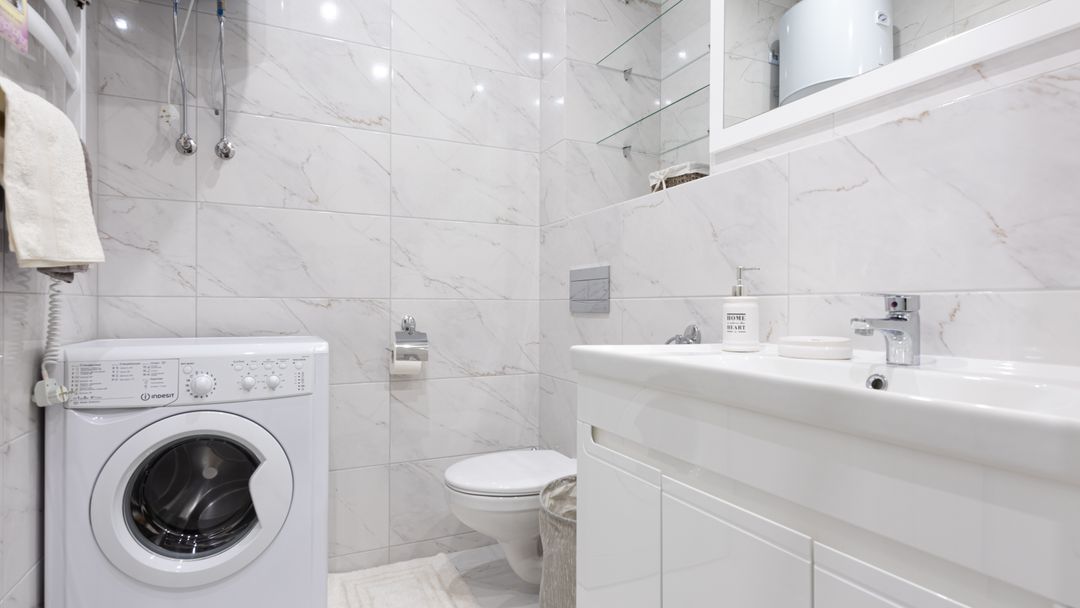
A trough or trench behind the machines beats individual standpipes. It takes the discharge across the row and gives the surge somewhere to go, rather than backing up whichever standpipe is nearest the blockage.
Venting has to be right or the seals get pulled. A big fast discharge moves a lot of air. Under vented, it siphons traps dry and the building smells, which is a problem customers notice long before you do.
Undersized line is a design fault, not a maintenance one. If the drains back up whenever the store is busy and clear when it is quiet, no amount of clearing will change that. The pipe is too small for the peak and it needs upsizing.
Floor drainage matters as much as the machine drainage. Hoses fail, drums overflow, customers spill. A floor that falls to a drain turns a flood into a nuisance.
Every load sheds fibre, and fibre behaves in a drain much like grease does in a kitchen: it coats, it builds, and it catches everything else.
Catch it before it enters the pipe. A lint interceptor or a basket at the trough, cleaned on a schedule somebody is actually responsible for. This one item prevents most of the call-outs in this building type.
Jetting, not cabling, once it has built up. A cable makes a channel through a felted mass and the store runs for a fortnight. Jetting takes the line back to bore.
Put the mains on a cycle. For a busy store, jetting the main runs on a planned interval costs less than one Saturday closure, and the interval should come from a camera survey rather than a guess.
Coins, buttons and small hardware collect at the low points. They are not usually the blockage on their own, but they give the lint something to build on, and they show up on camera as a shoal in a belly.
The supply side gets less attention than the drains and produces the more expensive failures.
Recovery matters more than tank size. A store needs hot water continuously through the busy hours, not a large tank that empties at eleven and refills by two. Sizing is a calculation against the machine count and the turnover, not a guess.
Machine supply hoses are under pressure permanently. They are the single most likely thing to flood the building, they have a service life, and replacing them on a schedule is far cheaper than one burst over a weekend.
Fit isolation you can actually reach. Valves behind a machine that has to be dragged out are valves nobody uses in an emergency. A bank of accessible isolators lets one machine be worked on without closing the store.
Hard water costs you twice. More detergent and scaled elements. On Ellis County water, softening a laundry is usually a straightforward payback rather than a luxury.
Tell us the machine count and whether the trouble is worse when the store is busy. That distinction separates a blocked line from a line that was never big enough, and they need entirely different work.
Ferris, Palmer, Red Oak and the neighbouring Ellis County towns are part of our usual round. We survey before quoting a maintenance interval, we jet rather than cable a lint packed line, and we will schedule the disruptive work for your quietest morning.
FAQ
That pattern points at capacity rather than a blockage. Several machines dumping at once exceed what the line can carry, and clearing it will not change the peak. It usually needs upsizing or a trough arrangement.
Lint. It coats the pipe like grease in a kitchen and then catches everything else. A lint interceptor at the trough, emptied on a schedule, prevents most of the problems in this building type.
A cable punches a channel through a felted lint mass and the store runs for a couple of weeks. Jetting removes it and takes the pipe back to full bore.
Set the interval from a camera survey rather than a schedule off a sales sheet. For a busy store it is usually once or twice a year, and it costs less than a single Saturday closure.
Recovery rate matters more than tank size. It should be calculated against the machine count and expected turnover, because the requirement is continuous hot water through the busy hours.
A machine supply hose. They are under pressure permanently, they have a service life, and replacing them on a planned schedule is much cheaper than one failure over a weekend.
Yes. A fast discharge moves a lot of air, and if the system is under vented it siphons the water seals out. The result is a smell in the store that customers notice quickly.
Usually yes on hard water. You save detergent and you stop scaling elements and valves, and the payback is normally straightforward to work out from your own usage.
Nearby
Services
Buildings where every machine empties at once.
About this serviceLint packed mains taken back to bore.
About this serviceTroughs, traps and the floor drains.
About this serviceRecovery sized against machine count.
About this serviceScale off elements and valves.
About this serviceA burst machine hose over a weekend.
About this serviceTalk to someone now
Tell us the machine count and whether it only happens when you are full. That decides what kind of job this is.
Call about a laundry