Drain Cleaning
Main line stoppages cleared from the cleanout.
About this serviceDallas-Fort Worth
Almost every difficult sewer call in Forney comes back to the same question: where can we get into the line. A house with a proper cleanout gets cleared from outside in an hour. A house without one gets cleared through a toilet or a roof vent, slower, messier and with less of the line reachable. It is worth knowing which house you have before the line backs up.
24/7 dispatch · Forney · Kaufman County
A cleanout is a capped fitting that opens directly into your sewer line, usually a four inch pipe standing just above grade with a threaded or push-in plug in the top. It is not a drain and nothing is supposed to come out of it. It exists so that a cable or a jetting hose can be pushed into the line at full diameter, in the right direction, without going through a fixture.
It decides how the work gets done. From a cleanout we can run a cable downstream toward the city main and upstream toward the house, then put a camera in afterwards and see the result. Through a pulled toilet we are working around a bend at a reduced angle, and through a roof vent we are fighting gravity and offsets the whole way down.
It also tells us where the blockage is. If the cleanout is dry and the house is backing up, the problem is between the fixture and the cleanout. If the cleanout is standing full of water, the line is blocked downstream of it, out toward the main. That single observation changes what we bring and roughly what the job costs, which is why we ask you to look before we set off.
It is the pressure relief point too. When a main line blocks and there is a cleanout outside, the line tends to surcharge out at the cap in the yard rather than up through the lowest fixture in the house. That is not a pleasant outcome, but it is a far cheaper one than sewage coming up in a shower pan.
Plenty of houses on our Forney route have no accessible cleanout. Some never had one, some have one that has disappeared, and the two situations feel identical at eleven at night.
Older houses often genuinely do not have one. Requirements tightened over the decades, and a house built before the current rules can have a sewer line running from under the slab straight to the main with nothing to open along the way. Nothing about that is illegal, it just limits what can be done quickly.
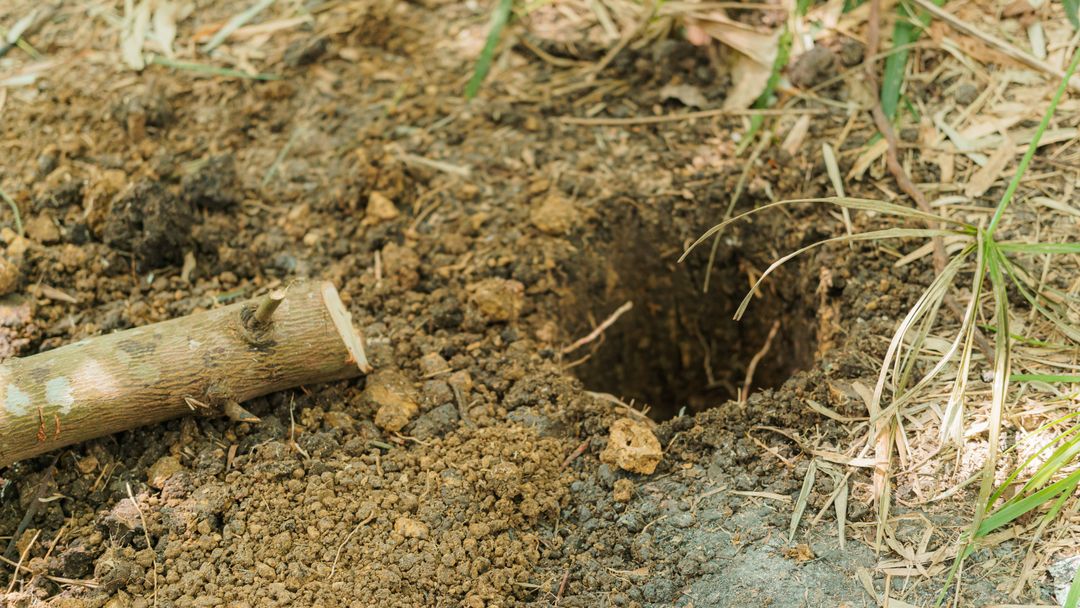
Newer houses usually have one, buried. Grade gets raised, flower beds get built up, sod gets laid over the top, and a cap that was two inches above the dirt is now four inches under it. We find these with a locator and a probe, and it is rarely more than a few minutes of digging once the line has been traced.
Some are inside, or under something. Cleanouts turn up in garages, in closets, in the middle of a patio poured ten years after the house, and once in a while under a shed. A cleanout under a permanent structure is the one case where adding a second one is usually cheaper than reaching the first.
Missing caps cause their own problems. An open cleanout lets sewer gas into the yard, lets soil and mulch wash into the line, and is a standing invitation to roots. If you have a cleanout with no cap, that is a five minute fix worth doing before winter.
Worth locating on a calm afternoon. If you do not know whether you have one, the time to find out is not while water is rising in the tub. Walk the route the sewer would take from the house toward the street and look for a round cap, white or black plastic, or a brass plug in a concrete box.
Installing a cleanout is a small excavation, a cut into the existing line and a fitting glued in, and on most Forney lots it is a half day job. What matters is where it goes and what kind it is.
Close to the house, on the main line. The useful position is on the building sewer a short distance outside the wall, before the line has run far and before it has picked up anything else. That gives access both ways and keeps the cable length to the house short.
A two way fitting is worth the small extra cost. It lets a cable go toward the street or back toward the house from the same opening, which saves cutting the line again the first time the blockage is at the other end. On a line that already has a history, ask for one.
Depth decides the method. A line eighteen inches down is a hand dig. A line five feet down, which happens on lots that slope away from the street, means a bigger hole, possibly shoring, and a different price. Anyone quoting a cleanout without knowing the depth is guessing.
Do it while something else is open. If a section of line is being repaired, or the yard is already dug for irrigation or a driveway, that is the cheapest cleanout you will ever buy. The excavation is most of the cost.
Keep it findable afterwards. Photograph it with the house in the background, measure off two fixed points, and keep the cap clear of sod and mulch. Houses that get this right are the ones where a main line clear stays a routine call for the next twenty years.
Someone answers the phone at any hour. Tell us which fixtures are affected, whether you have found a cleanout outside, and if you have, whether it is dry or standing full. That is the most useful sentence you can give us, because it separates a blockage inside the house from one out toward the main before we arrive.
Forney and the rest of Kaufman County are on our daily route, with overnight dispatch. We clear from a cleanout wherever one exists, camera the line afterwards rather than asserting it is fine, and quote an access fitting as its own line item so you can decide about it separately from the emergency.
FAQ
Look along the route between the house and the street for a round cap sitting just above grade, white or black plastic, or a brass plug in a small concrete box. Garages and side yards are the other common spots. If you cannot find one, we can trace the line and locate it.
It means the blockage is downstream of it, somewhere between there and the city main. That is useful news, because it rules out a simple fixture stoppage and tells us to work from the cleanout toward the street.
Yes, usually by pulling a toilet or working through a roof vent, but both are slower, reach less of the line, and make a camera inspection harder afterwards. It is a workaround rather than a preference.
It depends almost entirely on depth and what sits over the line. A shallow run in open grass is a half day job; a deep line under a driveway is a different conversation. We put eyes on it and price the excavation honestly rather than quoting blind.
Yes. An open cleanout lets sewer gas escape, lets dirt and mulch wash into the line, and gives roots an easy entry. Replacing a cap is minutes of work and is worth doing straight away.
Two way, in almost every case. It lets a cable go toward the main or back toward the house from a single opening, which matters the first time the blockage is at the opposite end from last time.
Sometimes, through a pulled toilet, but the bend and the reduced diameter limit what the camera can reach and how good the footage is. Proper camera work wants a cleanout to enter from.
The cleanout sits on your side of the boundary, and the private sewer from the house to the city connection belongs to the property owner. If the blockage proves to be in the public main, that is a call to the utility and we will tell you so.
That is the most common version of this call. Landscaping and raised beds bury caps within a few years. We trace the line, probe for the fitting, and bring it back up to grade so it stays usable.
No. A cleanout is a small capped access on the sewer pipe itself, typically four inches across. Septic tank lids and interceptor covers are much larger and serve a different purpose entirely.
Services
Main line stoppages cleared from the cleanout.
About this serviceRecorded footage once there is an opening to enter.
About this serviceFull diameter scouring, which needs proper access.
About this serviceFixing what the camera finds past the cleanout.
About this serviceReplacing a Forney line without opening the whole yard.
About this serviceSewage backing up overnight in Kaufman County.
About this serviceTalk to someone now
Check the cleanout in the yard first if you have one, and tell us whether it is dry or standing full. That one detail tells us where the blockage is before we set off.
Call about a backing-up drain