Outdoor Hose Bib and Spigot Repair
Hydrants, bibs and frost-proof fittings.
About this serviceDallas-Fort Worth
Terrell is a town with pasture attached. Plenty of properties here have a house, a barn or a shop, a few hundred feet of buried line between them, and a hydrant standing in the yard that somebody installed in a decade nobody can name. That water, the part of the system that is outdoors and out of sight, causes more expensive surprises in Kaufman County than anything inside the house.
24/7 dispatch · Terrell · Kaufman County
The frost-proof yard hydrant is the most misunderstood fitting on a Texas property, because of one feature that is deliberate.
It drains itself underground, on purpose. The valve is at the bottom of the standpipe, below frost depth. When you close the handle, the water left in the pipe escapes through a weep hole into a gravel bed, which is what stops it freezing in the standpipe. Working as designed, it leaves a wet patch under the ground every time you use it.
That weep hole is also a cross-connection. An opening below grade, in wet gravel, connected to your supply. If pressure drops, contaminated groundwater can be drawn back through it. This is precisely why a hydrant should not be fed from a line serving the house without proper backflow protection, and why hydrant heads standing in a puddle or a corral need attention.
Constant wetness at the base means the valve is not seating. A properly working hydrant drains a small measured volume and stops. A patch that never dries, or a hydrant that runs on gently after closing, means the plunger seal at the bottom has worn. It is a serviceable part, and it does not mean digging up the line.
Support and depth are what break them. A hydrant knocked by a vehicle or leaned on by livestock transmits that load straight to a joint five feet down. Bracing the standpipe properly is the difference between replacing a washer and digging a hole.
A long private run to an outbuilding is unmetered, unsupported by any record, and usually unmapped.
Nobody knows where it goes, which makes locating step one. Before any digging, trenching for a fence, or setting a post, the route needs finding. Tracing a non-metallic line is harder than a metallic one, and it is still far cheaper than cutting it with a trencher.
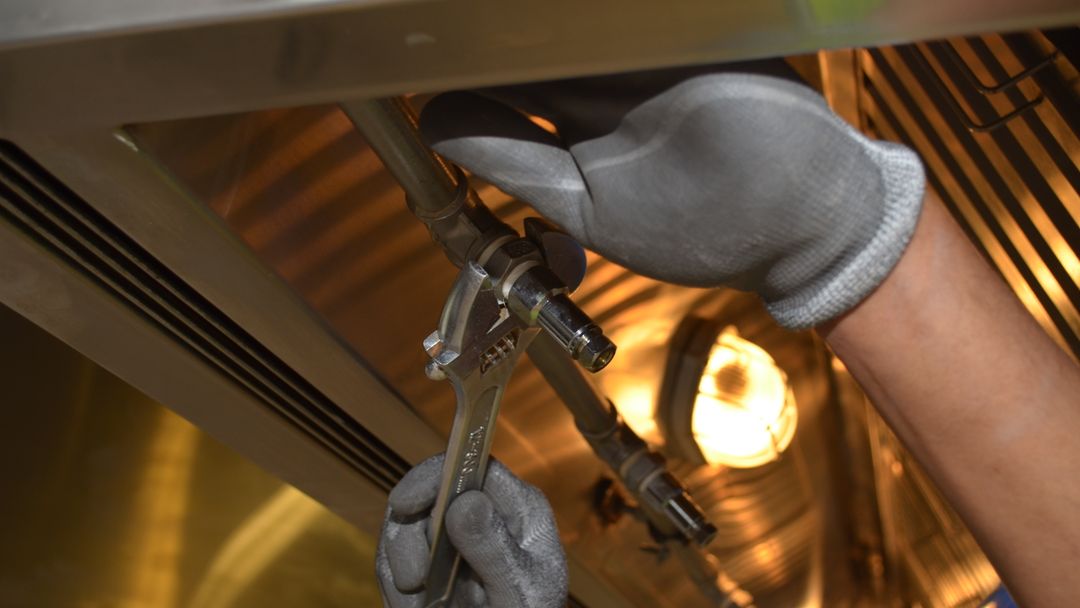
Isolation is what turns a disaster into an inconvenience. A valve where the barn line leaves the house line, in a proper box at the surface, lets you shut off a leaking pasture run and keep the house in water. On a property with three or four branches, one valve per branch is the arrangement worth paying for.
A leak out there does not show up as a puddle. Blackland clay does not drain, so a break two feet down over a pasture often produces no visible water at all. It shows up as a meter that never stops, a pressure drop at the far building, or grass that stays green in August.
Distance and diameter decide whether the barn has usable pressure. Four hundred feet of undersized pipe delivers a disappointing hose no matter what the pressure is at the house. Where a run is being replaced, sizing it for what the building actually needs costs very little more at the time of trenching and cannot be changed afterwards.
Livestock water introduces two questions that a house never asks.
A hose in a trough is a siphon waiting for a pressure drop. A filling pipe submerged in standing water that animals drink from is directly connected to your supply. Automatic float valves need an air gap or an approved anti-siphon device, and a hose left hanging in a tank is the version of this problem everyone has.
Freeze management for troughs is not the same as for pipe. Tank heaters and de-icers keep drinking water open. Protecting the supply to them is a separate job, and a hydrant is usually the safer arrangement than a permanently pressurised line to a trough.
Sub-meters answer the argument about usage. Where a second dwelling, a shop or a leased pasture sits on your service, a sub-meter on that branch tells you what it uses and shows a leak on that side of the property immediately.
Ask whether the irrigation and stock water should be separated. On a property where the utility offers it, keeping outdoor water on its own arrangement can change what you pay and what backflow protection is required. It is worth a phone call before a new line is laid.
The phone is answered around the clock, holidays included. On a rural property, tell us what buildings are on the service and whether you know where the line runs, because locating is often the first half of the job.
Terrell and the surrounding Kaufman County communities are on our daily route, with real overnight dispatch. On yard lines we locate before we dig, fit isolation valves where the branches leave so the next fault does not take the house out with it, and deal with backflow protection on hydrants and troughs as part of the work rather than as an upsell.
FAQ
Probably not. A frost-proof hydrant drains the standpipe underground through a weep hole so it cannot freeze, which leaves a small wet area by design. What is not normal is a patch that never dries or a hydrant that keeps running gently after you close it.
The plunger seal at the bottom of the standpipe has worn. It is a serviceable part and replacing it does not normally mean excavating the buried line, provided the standpipe and its joint below are sound.
It is a genuine cross-connection point, because that weep hole sits below grade in wet gravel and is connected to your supply. Proper backflow protection on the line feeding it matters, and a hydrant head standing in a puddle or a corral should be dealt with.
Very likely. Blackland clay does not drain, so a break a couple of feet down can show no surface water at all. Pressure loss at the far building or a green patch in the dry months are the other signs.
Yes, and it is worth doing first. Non-metallic lines are harder to trace than metal, and locating the route is always cheaper than repairing a line a trencher has cut, particularly when it is the only water to a barn.
So a leak in a pasture run can be isolated while the house keeps water. A valve in a surface box where each branch leaves the main run is inexpensive when the ground is already open and very expensive to add later.
Yes. A pipe submerged in standing water is a siphon if pressure drops, and the tank is not clean water. Automatic fills need an air gap or an approved anti-siphon device, and a loose hose should come out of the tank between fills.
That is usually distance and pipe diameter rather than pressure. Several hundred feet of undersized line cannot deliver a decent hose flow. If the run is ever being replaced, size it for the building's real demand while the trench is open.
Services
Hydrants, bibs and frost-proof fittings.
About this serviceLong private runs to barns and shops.
About this serviceFinding a break with no surface water.
About this servicePumps and pressure on rural supplies.
About this serviceExposed lines to outbuildings.
About this serviceOvernight dispatch across Kaufman County.
About this serviceTalk to someone now
We locate the run before anyone digs, tell you whether it is the hydrant, the line or the pressure, and fit the isolation valves that keep the house in water next time.
Call about a yard hydrant or barn line