Outdoor Hose Bib and Spigot Repair
Frost free hydrants and their drainage bed.
About this serviceDallas-Fort Worth
On a Krum property with animals on it, the water supply has a job the house never gives it: it has to work every single day, outdoors, in whatever weather, with nobody watching. Stock water is the least glamorous plumbing on a place like this and the most consequential, because the failure mode is not an inconvenience.
24/7 dispatch · Krum · Denton County
The hydrant is the workhorse of a small holding and it is misunderstood more than any other fitting.
It shuts off underground, below the frost line. The handle at the top operates a valve several feet down, and the water above that valve drains out each time you close it. That drainage is the entire reason it survives winter.
It must be able to drain, or it is not frost free. The base needs gravel or a drainage bed so the column of water can escape. A hydrant set in concrete or in saturated clay holds water in the standpipe and freezes exactly like any other tap.
Do not leave a hose attached. A hose left connected can prevent the standpipe draining and can siphon dirty water back down it. It is the most common cause of both a frozen hydrant and a contaminated one.
Half open is worse than either. These are designed to be fully open or fully closed. Running one partly open causes it to weep continuously underground, which you will discover as a soft wet patch rather than as a drip.
Repairs are usually the plunger and the seal. Most hydrant faults are a worn plunger or seat rather than a failed body, and rebuilding one in place is straightforward if it was installed with access in mind.
Give it somewhere to be reached. A hydrant surrounded by a pen, a feeder or stacked round bales cannot be rebuilt without moving all of it, and the repair always happens in the worst weather of the year. Clear access on two sides is worth arranging while it is working.
Automatic watering is worth having and it introduces a component that fails quietly.
A stuck float runs continuously. A float valve that does not close overflows the trough and soaks the ground around it, and on a large property that can go unnoticed for weeks. It is the single biggest source of invisible water loss on acreage.
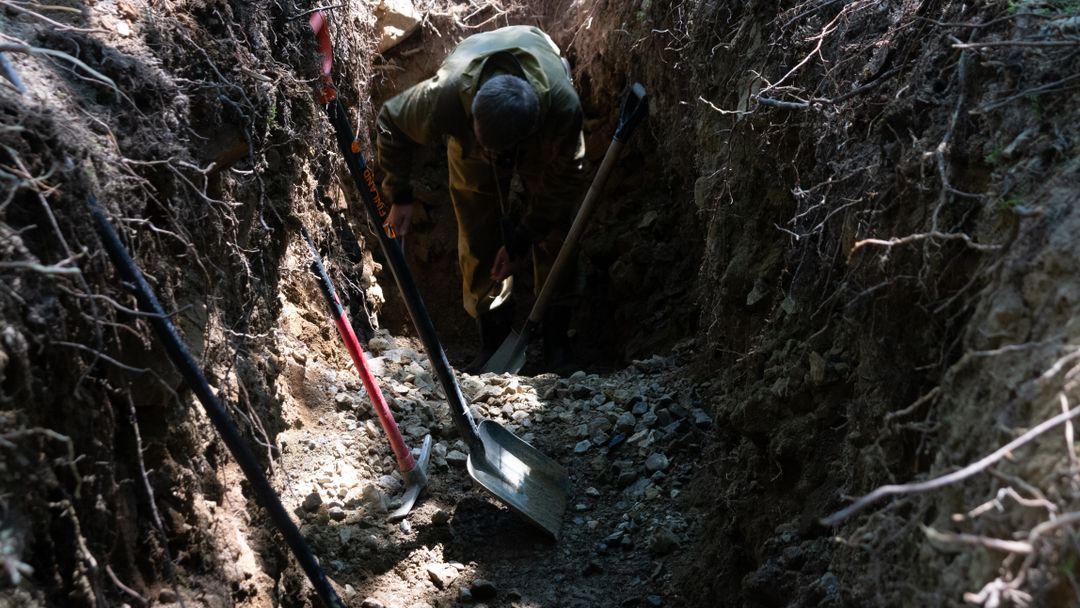
Protect the float from the animals. Cattle and horses will lean on, rub against and break an unprotected valve. A proper housing is not an accessory, it is what makes the installation last.
Backflow protection matters on every trough line. A trough is standing water that animals drink from, and a supply line terminating in it is a cross connection. This is where the rules exist for a genuinely good reason.
Heated waterers need electrical work done properly. Tank heaters and heated bowls involve power and water in the same place, in a field, and that combination deserves correct circuits and protection rather than an extension lead.
Size for the herd on the hottest day. Refill rate matters more than trough volume in summer, and a line that copes in March can fall behind in August.
Keep troughs clean and know the normal level. Algae and sediment foul float valves, and an owner who knows what the normal level looks like spots a fault days earlier.
The long runs out to buildings are where the expensive failures happen.
Bury the line properly and record it. Adequate depth, a tracer wire on plastic pipe and a photograph of the open trench. A buried line you cannot locate becomes an excavation every time it needs attention.
Isolate every branch. A valve where each spur leaves the main run means a broken trough line does not take the house or the barn with it. In a freeze, that single feature is what limits the damage.
An unheated barn has no margin. Exposed pipe inside a barn freezes as readily as pipe outdoors, so the honest options are draining it down or providing genuine heat and insulation.
Plan for water when the power is out. On a well, no power means no water, and animals need it daily. Knowing how you will fill troughs during an outage is worth thinking about before one.
Keep stock and house water sensibly separated. Separate branches with their own isolation and correct backflow protection means a fouled trough line cannot affect the house, and a repair out in the field does not shut down the kitchen.
Walk the system weekly in winter. Every hydrant, every trough, every exposed run. It takes twenty minutes and it is how these systems survive a hard season.
Watch the meter or the pump after dark. With the house asleep and nothing being used, any consumption is going somewhere outdoors, and that is the cleanest test available on a property with a long distribution system. Five minutes at night finds what a daytime walk misses.
The phone is answered around the clock, holidays included. Tell us whether the problem is a hydrant, a trough, or a line to a building, whether the property is on a well or a supplied system, and whether animals are currently without water. That last answer changes the priority.
Krum and this part of Denton County are on our daily route, with overnight dispatch. We set hydrants with a proper drainage bed, fit backflow protection on trough lines, and put isolation valves on every branch so a failure in one place does not empty the whole property.
FAQ
Almost always because it cannot drain. The water above the underground valve has to escape into a gravel bed, and a hydrant set in concrete or saturated clay holds that water in the standpipe and freezes.
Yes, on two counts. It can stop the standpipe draining, which causes a freeze, and it can siphon dirty water back down the pipe. It is the most common cause of both failures.
No. They are designed to be fully open or fully closed, and running one partly open makes it weep continuously underground. You find out as a soft wet patch rather than a visible drip.
It matters a great deal. A float valve that does not close fully runs continuously, and on acreage it can go unnoticed for weeks. It is the largest source of invisible water loss we find on rural property.
Yes. A trough is standing water that animals drink from, and a supply line ending in it is a cross connection. This is one of the clearest cases where the requirement exists for an obvious reason.
Either drain it down before the cold or provide real heat and insulation. An unheated barn gives exposed pipe no more protection than being outdoors does, so leaving it and hoping is not one of the options.
On a well, nothing runs. Animals still need water daily, so it is worth deciding in advance how you would fill troughs during an outage rather than working it out on the day.
Separate branches with their own isolation and correct backflow protection is the better arrangement. It means a fouled or broken trough line cannot affect the house, and field repairs do not shut down the kitchen.
Nearby
Services
Frost free hydrants and their drainage bed.
About this serviceBuried runs out to barns and troughs.
About this serviceBarns, outbuildings and exposed branches.
About this serviceA weeping hydrant or a trough float that sticks.
About this serviceProperties supplying stock from a well.
About this serviceOvernight dispatch in Krum.
About this serviceTalk to someone now
Tell us whether animals are without water right now, and whether it is a hydrant, a trough or a buried line. That sets the priority.
Call about stock water or a barn supply