Sewer Line Repair
Laterals in rock, open cut and bored.
About this serviceGreater Austin
In Liberty Hill the ground fights back. Limestone sits close to the surface across much of the area, and that single fact explains why a buried repair here costs what it does, why your lateral is shallower than you would expect, and why the machine that shows up matters more than the plumber's hourly rate.
24/7 dispatch · Liberty Hill · Williamson County
Rock does not make buried work impossible. It makes it slow, and slow is what you are paying for.
The excavation becomes a cutting job. Below the thin soil layer, a trench has to be sawn or hammered rather than dug. That means different equipment, more time and more noise, and a quote that reflects hours of breaking rather than minutes of digging.
Your lateral is probably shallower than you assume. Original installers went as deep as the rock reasonably allowed, which often means a pipe closer to the surface than in a soil area. Shallow pipe is easier to reach and easier to damage, which matters when anything drives or digs over it.
Bedding is not optional on rock. Pipe laid directly on cut limestone rests on points rather than a continuous surface, and point loads crack pipe. Proper graded bedding under and around the line is what stops a new repair failing early.
Rock spoil does not go back the way it came out. Broken limestone backfilled straight onto a pipe damages it, so the material immediately around the line has to be imported, with spoil either removed or used higher up.
Ask specifically how rock is priced. Hourly breaking, a rock clause or a fixed price with a stated assumption are all common. The question to settle before work starts is what happens if there is more rock than expected.
Rock varies across a single lot. One corner can be workable soil and the other solid stone within thirty feet, which is why a neighbour's quote is a poor guide to yours. The only reliable answer comes from locating the line and testing the ground on your own property.
Because cutting rock is the expensive part, the best saving usually comes from cutting less of it.
Boring under obstacles beats trenching through them. Under a driveway, a patio or a mature tree, a bore keeps the surface intact and avoids reinstatement. In rock, it also avoids the slowest part of the work.
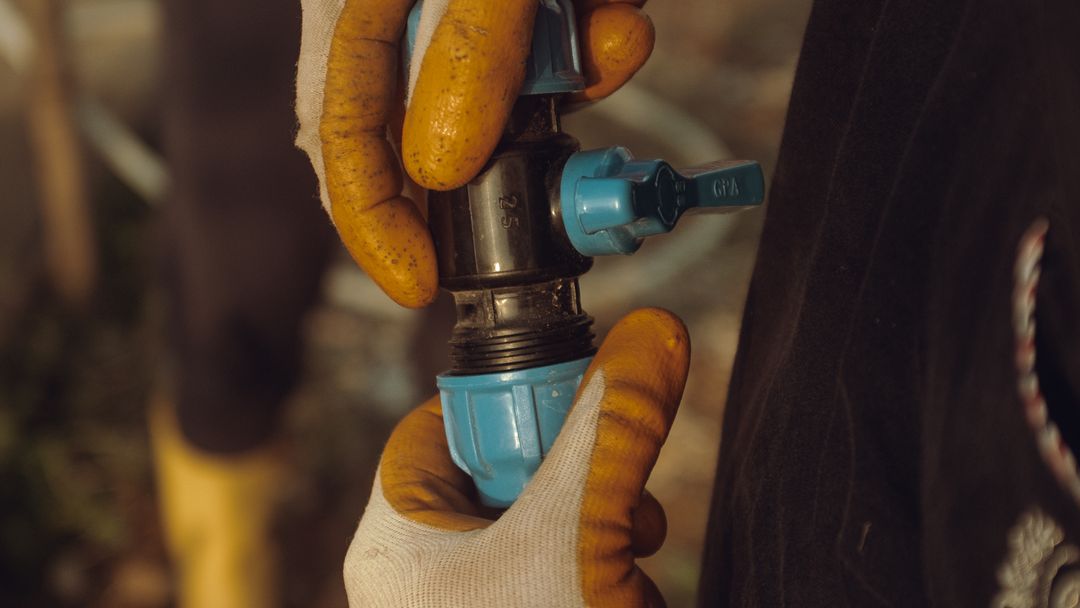
A longer route in soil can be cheaper than a short one in rock. Rerouting a supply line around a rock shelf, or bringing it into the house at a different point, sometimes costs less than twenty feet of breaking. It is worth asking for that option explicitly.
Lining suits rock country particularly well. Rehabilitating an existing lateral from small access pits avoids opening a trench along its length, which is exactly the work rock makes expensive.
Locate before you commit to anything. A camera and a locator give the route, the depth and the condition, and in rock the depth reading changes the method and therefore the price more than anywhere else.
Reinstatement is part of the job. Cut caliche, broken rock and a settled trench line across a yard are the visible legacy of this work, so agree what the surface will look like afterwards before the machine arrives.
Liberty Hill is building fast, and the cheapest time to solve a rock problem is before the slab goes down.
Get the depth and route recorded. On a new build, a photograph of the open trench with a tape in it, and a marked plan, is worth real money at the first repair. In rock it is worth more, because guessing wrong means breaking the wrong stone.
Put in the sleeves you will want later. A conduit under the driveway and a stub towards the back of the lot cost very little while the ground is open, and each one saves a rock excavation later.
Add accessible cleanouts. On a shallow, rocky run, a cleanout in the right place is the difference between a short visit and a day of breaking. Two well placed ones are usually enough.
Protect the shallow pipe from what happens above it. Shallow laterals under a future driveway, RV pad or heavy vehicle route need proper cover or protection, because a pipe that is only just buried is a pipe that gets crushed.
Test before the pour. Hydrostatic testing under slab drainage while it is still visible is cheap; finding the same defect through concrete and rock is the most expensive version of the same information.
Ask what the builder actually recorded. Many fast built subdivisions have no usable record of where the lateral crosses the lot, and in rock that omission is expensive at the first repair. Requesting the plumbing as built while the builder still cares is free and occasionally successful.
The phone is answered around the clock, holidays included. It helps to know whether anything has been dug on the property before, how deep the rock is if you know, and what is above the line, whether that is lawn, driveway or a patio you would rather keep.
Liberty Hill and northwest Williamson County are on our daily route, with overnight dispatch. We locate before we quote, we will tell you when boring or rerouting is cheaper than breaking, and we are straight about how rock is priced before anyone starts cutting.
FAQ
Because the trench has to be cut through limestone rather than dug. That is different equipment and many more hours, and it is the single largest variable in a quote for buried work in this area.
Often shallower than you would expect, because the original installers went as deep as the rock allowed. Shallow pipe is quicker to reach and easier to damage, which matters before anyone drives or digs over it.
Not against the pipe. Broken limestone backfilled onto a line damages it, so bedding and the material immediately around the pipe have to be imported, with spoil used higher up or taken away.
Often. Boring under a driveway or a tree, rerouting through softer ground, or lining an existing lateral from small pits all reduce how much rock has to be cut. Ask for those options by name.
Clearly, and in advance. Hourly breaking, a rock clause, or a fixed price with a stated assumption are all normal. What matters is agreeing what happens if there turns out to be more rock than expected.
Record the route and depth with photographs, put a sleeve under the driveway, add accessible cleanouts, and hydrostatically test the under slab drainage before the pour. All of it is cheap now and expensive later.
It is more exposed than deeper pipe, so a hard freeze deserves attention, particularly on exterior and above ground sections. It is a smaller risk than in the north, but it is not zero on a shallow line.
There will be a trench line, cut caliche and broken rock, and it settles over time. Agree the reinstatement standard before the work starts so there is no argument about it at the end.
Nearby
Services
Laterals in rock, open cut and bored.
About this serviceLining instead of trenching.
About this serviceSupply lines through limestone.
About this serviceRoute and depth before the method.
About this serviceGoing around the rock instead of through it.
About this serviceOvernight dispatch in northwest Williamson County.
About this serviceTalk to someone now
Tell us what is above the line and whether the property has been excavated before. We locate first, then quote the method that cuts the least stone.
Call about a buried line or a dig in rock