Main Water Line Repair
Supply runs that have shifted in loose ground.
About this serviceGreater Austin
Most of the plumbing advice written for Texas assumes clay. Around Bastrop a lot of it is sand, and sand fails in the opposite way. Clay grips a pipe and squeezes it. Sand lets go of it, washes out from underneath, and leaves a line hanging on its own joints.
24/7 dispatch · Bastrop · Bastrop County
A buried pipe is only as good as the material it lies on. In loose sandy soil that material moves, and once it has moved the pipe is carrying itself.
Washout is the failure that starts everything else. Water moving through sand, from a small leak, from a downspout, from irrigation, carries the fines away and leaves a void. The pipe above it sags into the gap. On a drain that means a belly, standing water and repeat blockages.
The sag does not need a big void. An inch of fall lost across a run is enough to hold water permanently, and a drain that holds water collects everything that passes through it. People treat that as a blockage problem and pay for cabling every few months. It is a support problem.
Proper bedding is the fix and the prevention. Graded material under and around the pipe, compacted in layers, not backfilled with whatever came out of the hole. It adds a little to the price of a repair and it is the difference between a repair that lasts and one you see again.
Watch what the surface tells you. A strip of lawn that sinks slightly, a patio corner that dropped, sand collecting at the bottom of a driveway. Around here those are worth a look, because subsidence in sand usually means water has been moving underground for a while.
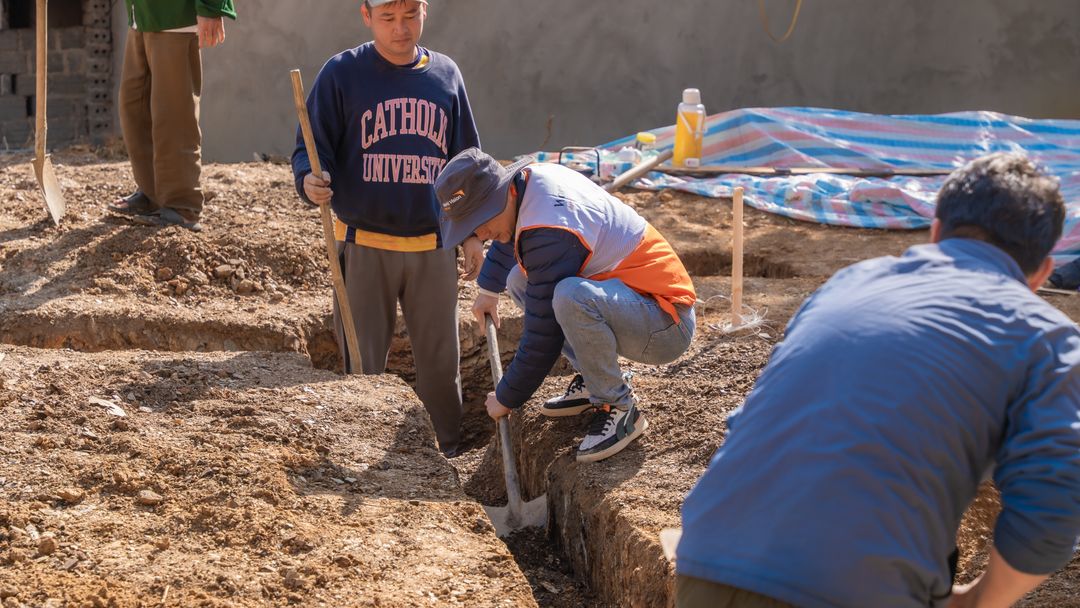
In clay you can dig a neat vertical trench and it will stand there while you work. Sand will not do that, and pretending otherwise is dangerous rather than merely awkward.
A sand trench has to be battered or shored. That means a wider excavation or boxes and plates, which means more spoil, more reinstatement and more time. When a quote for a dig in Bastrop looks cheaper than one in Austin for the same job, that is usually the line item somebody left out.
Water in the hole changes everything again. Near the river and the creeks the water table can be shallow, and sand plus water is the least cooperative combination there is. Dewatering while you work, and bedding that will not simply wash away again, both belong in the plan before anyone breaks ground.
Boring is often the better answer. Sand bores well. Where the run is long, under a drive, or where opening a trench means fighting the sides for two days, going under it is frequently faster and less destructive, even though the hourly rate looks higher.
Backfill is a real task, not tidying up. Loose sand dropped back in a trench will settle for months, and the trench line reappears across your yard as a depression. Compacting in layers is what stops the callback.
Ground that is not stable transfers its movement into whatever is buried in it. The pipe does not usually break in the middle. It comes apart where two pieces meet.
Rigid joints are where sandy ground does its damage. Old clay tile with mortared joints, cast iron hubs, unsupported PVC at a fitting. Enough differential movement and the joint opens a little. Water leaves through it and takes more sand with it, which opens it further.
Tree roots follow the opening. In the Lost Pines the roots are there already, and they are looking for exactly this. Roots are not the original fault here, they are what arrives after the joint has failed, which is why cutting them alone does not end the problem.
Where we can, we use fewer joints. A continuous run, a lined length or a bored replacement gives movement less to work on. On a property that has already had two failures at fittings, that consideration is worth more than the pipe material argument.
Support an exposed run properly. Where pipe crosses a creek bank, comes out from under a pier and beam house, or runs across the fall of a lot, it needs hangers and bearers that hold it, not soil that used to.
If the camera finds sand sitting in the bottom of your drain, that is a specific and useful piece of information.
Sand inside means an opening outside. It has come in through a crack, a displaced joint or a failed connection, and each grain that arrives came from the ground supporting your pipe. The blockage and the void are the same problem seen from two directions.
Jetting it clear treats the symptom. It is worth doing to see the pipe properly, but if the defect that let the sand in is not repaired, the same silt is back within months. Ask for the camera footage after the jetting, not just before.
Grit does the same thing to pumps and valves. On a property with a well or an irrigation intake, fine sand wears seals, jams float valves and scores pump impellers. Filtering it out is cheaper than replacing the equipment it grinds.
Keep surface water away from the run. A downspout discharging over a buried line, or an irrigation head watering the same strip every evening, is the most common thing feeding a washout. Moving the discharge a few feet is the cheapest repair on this page.
Tell us what the ground is doing as well as what the plumbing is doing. A soft patch of lawn, a sunken path or sand in a drain all point somewhere before we arrive.
Bastrop, Elgin, Smithville and the rest of Bastrop County are on our daily route. We camera before we dig, we bed and compact properly rather than tipping spoil back in a hole, and we will tell you plainly when boring under a run is the cheaper way to do it.
FAQ
Usually because the line is holding water in a low spot rather than being genuinely blocked. In sandy ground that low spot is normally a washout under the pipe, and clearing it again does not put the support back.
Often, yes. Water moving through sand carries the fines away and the surface drops into the void. It is worth investigating early, because the void grows quietly and can undermine a path or a slab edge.
Sand will not stand up, so the excavation has to be battered wider or shored, and that is more digging, more spoil and more reinstatement. A quote that does not account for it tends to grow once the hole is open.
Frequently. Sand bores well, so pulling a new line in or boring a fresh route is often faster than fighting a trench that keeps falling in, particularly under a drive or a mature tree.
That there is an opening somewhere letting ground into the pipe. The sand and the void under the pipe are the same defect, so repairing the opening matters more than clearing what has collected.
Usually the ground first. A joint moves, water escapes, roots find the wet opening and exploit it. Cutting the roots without repairing the joint gives you a repeat visit on a schedule.
It is common and it is avoidable. Loose sand tipped back into a trench settles for months. Compacting in layers, with the right material around the pipe, is what prevents it.
Yes. A shallow water table plus sand means dewatering during the work and bedding that will not wash straight back out. Both need to be priced in rather than discovered on the day.
It wears seals and impellers and it jams float valves. If you are seeing grit at the taps, filtration and a look at the intake are cheaper than the pump it is slowly grinding away.
It varies with the run and the fall rather than with the soil, and in Bastrop County plenty of older laterals are shallower than people expect. We locate before anyone digs, because guessing in loose ground is how a line gets cut.
Nearby
Services
Supply runs that have shifted in loose ground.
About this serviceJoints pulled open where bedding washed away.
About this serviceFinding sand where water should be.
About this serviceGoing under ground that will not hold a trench.
About this serviceFollowing a leak that surfaces yards from the break.
About this serviceNight calls when a yard suddenly goes soft.
About this serviceTalk to someone now
Tell us what the yard is doing as well as the plumbing. In sandy ground the two are usually the same story.
Call about a line in sandy ground