Commercial Plumbing
Amenity sites treated as the small commercial properties they are.
About this serviceGulf Coast
Almost every neighbourhood in League City comes with an amenity centre, and every one of them is a small commercial property that a volunteer board is responsible for: a pool, a splash pad, a clubhouse with restrooms that see five hundred people on a Saturday and nobody on a Wednesday.
24/7 dispatch · League City · Galveston County
An amenity centre has several water systems in one small footprint, and the whole job is keeping them from touching. Potable water feeds the restrooms, the drinking fountain and the kitchen. Pool water is recirculated, chemically treated and is not drinking water at any point. Splash pad water may be recirculated or single pass depending on how the feature was built, and irrigation runs from its own meter across the common area.
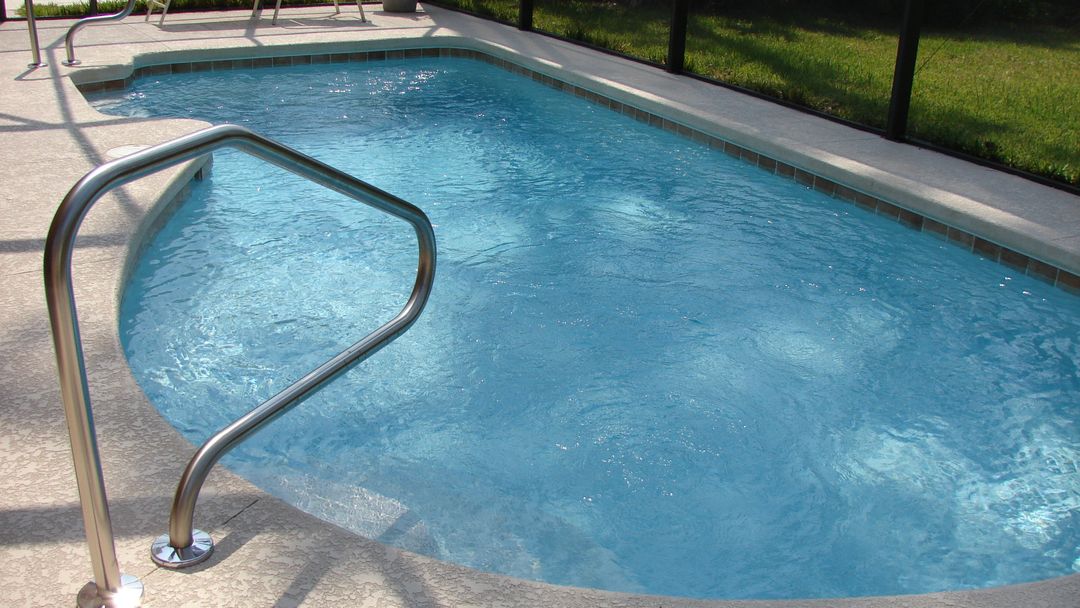
Every point where those systems could meet needs a device that makes reverse flow impossible, and those devices need testing on a schedule by someone certified to do it. The fill line into the pool is the obvious one. The less obvious ones are the hose bibs used to wash the deck, the chemical feed connections, and any line that was added to the pump room after the original build.
Boards change every year or two and the file often does not travel. If nobody can produce the last test report for the assemblies on site, assume they are due, and start a folder that outlasts the current board.
Amenity restrooms fail in two opposite directions. Under load they run out of what a house never runs out of: hot water at the basins, flush performance when every fixture cycles at once, and drainage on a branch that was sized when the pool was half the size.
Empty, they do the opposite. Nothing has run through a changing room gully since the last pool party, the seal in it has evaporated in the coastal heat, and what reaches the lobby on Friday is the main line venting through the gap. This is a fixture that gets used in bursts, so the answer is either a primer feeding it automatically or a line on the caretaker's weekly round that says pour a jug down each one.
Drainage deserves the same thought. A clubhouse branch that copes with a committee meeting can back up when a swim meet empties into it, and the usual cause is not the pipe but what goes into it: sand, sunscreen, hair and the paper a busy restroom gets through in an afternoon. Fitting a cleanout somewhere reachable, rather than behind the water heater, converts that from a callout into a twenty minute job.
Then there is what gets installed. An amenity restroom is chosen by a board looking at a showroom, and the trim that photographs well is the trim that fails here: tank fittings adjusted by strangers, spring taps left running, cartridges nobody can source in two years. Ask the supplier what is stocked locally and what a replacement costs in five years, and let those two answers narrow the list before anyone discusses the finish.
Opening week is where most of the year's failures are discovered, usually two days before a scheduled pool party. The way to avoid that is to open in two stages: a quiet commissioning visit three weeks ahead, then the public opening.
Commissioning is a list. Restore water and walk every fixture. Fill and prove the traps. Run the splash pad through a full cycle and check the drainage takes it, because a feature that overwhelms its own drain floods a deck. Check that the pool autofill actually stops. Pressure test the fill and backwash lines. Have the backflow assemblies tested and file the report.
Shutdown at the end of the season matters just as much on this coast. It is rarely about hard freeze, though the last several winters have argued otherwise, and mostly about an unattended site: isolate what is not needed, drain the exposed splash pad pipework, leave a labelled shutoff that a board member can find in the dark, and keep the interior warm enough that an unused restroom does not become the property's biggest claim.
The practical difficulty on HOA work is rarely the plumbing. It is that the person who finds the problem, the person who can authorise the spend and the person who holds the keys are three different people, often on three different schedules.
What works is a standing authorisation: a written limit under which we can diagnose and make safe without waiting for a board vote, agreed once a year, with anything above it quoted before work. That single arrangement is the difference between a pool closed for a weekend and a pool closed for a fortnight.
Budget in the same spirit. Amenity plumbing does not fail gradually across a whole site; it fails one expensive component at a time, usually the water heater, the pool fill arrangement or a section of branch drain. Knowing the ages of those three and putting a line in the reserve study against each is what stops a special assessment in a year when the roof also needs doing.
Keep the site file with the association, not the contractor. Backflow test reports, a marked plan of the isolation valves, water heater ages, and the last camera run of the clubhouse lateral. New boards inherit a property, and at the moment most of them inherit it blind.
We would rather do two scheduled visits a year than be called at eleven on a holiday weekend. Spring commissioning, autumn shutdown, and a written condition note each time that a board can hand to the next one.
League City, Dickinson, Kemah, Friendswood and the rest of northern Galveston County are inside our normal run, and we will hold a fixed rate for associations with more than one amenity site.
FAQ
The property is, which in practice means the association. The assemblies protecting the potable supply need testing on a set interval by a certified tester, and the report needs keeping. If nobody can find the last one, it is due.
Usually a drainage one. The feature is delivering what it was designed to and the drain is either undersized, partly blocked, or set slightly high. It is worth solving properly, because standing water on a deck is a liability question as well as a nuisance.
Almost always dry traps. Fixtures that go unused all week lose their seal, and the first person through the door on Friday gets the result. Trap primers or a scheduled weekly run of every fixture fixes it.
Not always. Check the mixing valve setting and the delivery temperature first, because many amenity restrooms are set low enough that the tank empties faster than it should. If the sizing genuinely is short, a second small unit near the demand often beats replacing the main one.
Check it. A stuck autofill runs continuously into a pool that never looks any different, and on a common meter nobody notices until the bill. It is also a connection that needs proper protection against reverse flow.
Isolate and drain what will not be used, particularly the exposed splash pad pipework and outdoor showers, keep the clubhouse above freezing, and leave a labelled main shutoff plus a plan showing it. Then give a copy to two board members, not one.
Keep the site file with the association. Test reports, valve locations, equipment ages and the last camera inspection. Contractors and managers come and go; the property does not.
With a standing authorisation agreed in advance, yes, up to the limit you set. Without one we will still make the site safe, but the repair waits on approval and that is usually the expensive part.
Water restored and every fixture run, traps filled, splash pad cycled and drainage checked, autofill proven, fill and backwash lines tested, backflow assemblies tested and reported, and a written list of what needs doing before opening.
Three weeks. That leaves time to order anything that failed. Booked the week before, all a commissioning visit can do is tell you what will not be ready.
Nearby
Services
Amenity sites treated as the small commercial properties they are.
About this serviceDeck drains and clubhouse branches after a full weekend.
About this serviceBasin hot water sized for a Saturday, not a Tuesday.
About this serviceFlush valves and trim chosen to survive public use.
About this serviceDeck washdown points and the protection they need.
About this serviceA pool closed on a holiday weekend is the expensive version.
About this serviceTalk to someone now
Book commissioning three weeks out, not three days out.
Book an amenity walkthrough